The Reinstatement Clause in a Tenancy Agreement, Explained
What a reinstatement clause means, how it is commonly worded, what to negotiate before you sign, and how disputes usually arise at the end of a lease.
Jun Wei
6 min read
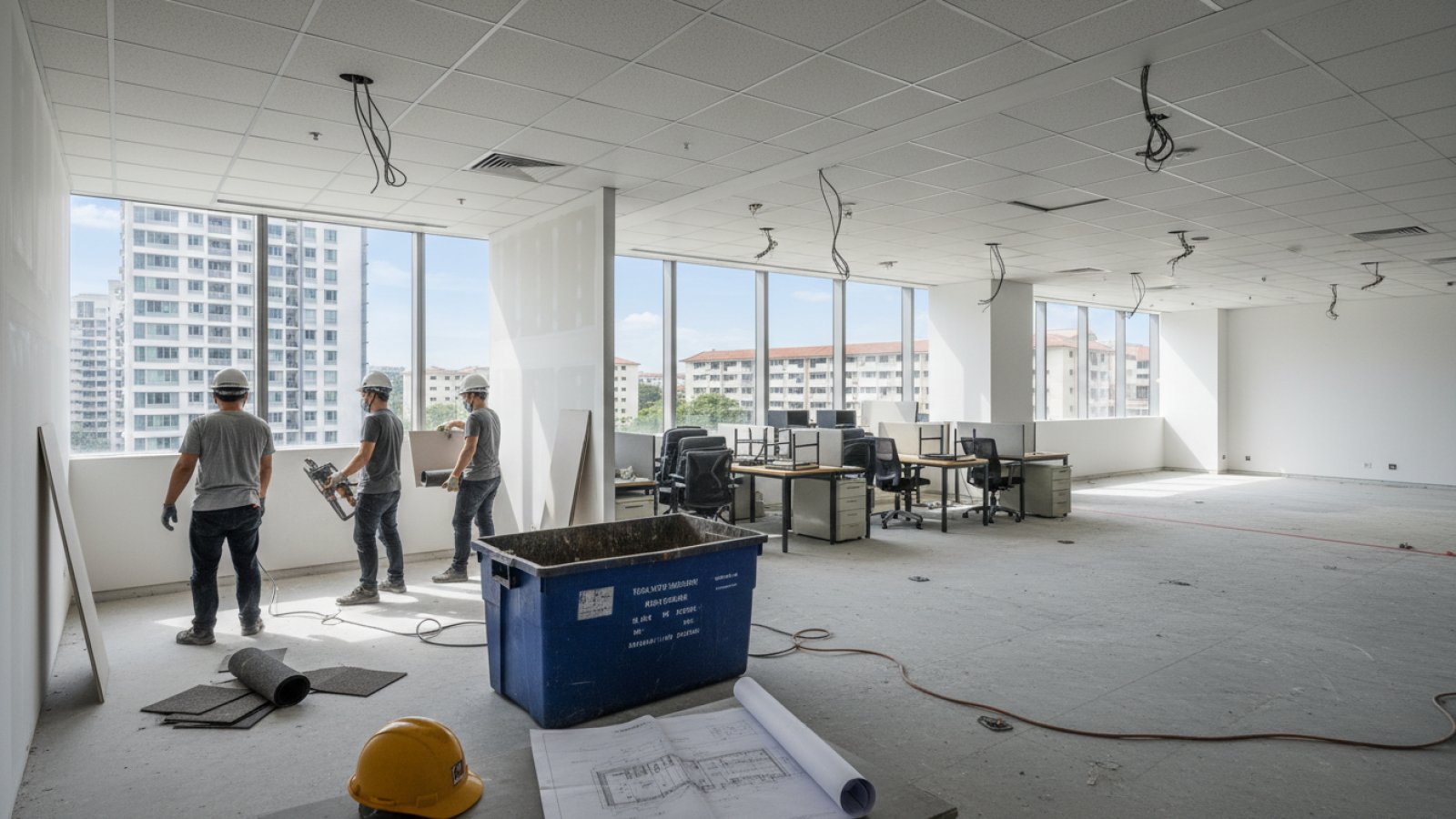
The reinstatement clause in a tenancy agreement sets out what the tenant must do to the premises when the lease ends, usually returning them to their original condition. In Singapore commercial leases, it is often the clause with the largest cost attached, because a tenant who fitted out an office, shop or restaurant may have to remove it all. In residential tenancies it is usually lighter, but the same principle applies. This article explains what the clause means, how it is usually worded, what to negotiate, and where disputes come from.
This article is general information, not legal advice. For advice on a specific lease, speak to a lawyer.
What the reinstatement clause means
A reinstatement clause obliges the tenant to put the premises back into a stated condition at the end of the lease, at their own cost. Most commonly that is the condition at the start of the lease.
If you renovated the space, you generally have to undo the renovation. For an office, that can mean removing partitions, joinery, raised floors, added air-conditioning and lighting, and reinstating the building-standard ceiling, floor and finishes. For a shop or F&B unit it can extend to the shopfront, kitchen exhaust and wet-area works.
The clause usually works alongside the security deposit and a make-good obligation for damage. If the tenant does not reinstate, the landlord can typically carry out the works and recover the cost, often from the deposit.
Common wording
Reinstatement clauses vary, but most use a few standard phrases. Each one sets a different standard.
- "Original condition" or "the condition at the commencement of the lease": return the premises as they were when you took them. The handover record defines what that was.
- "Bare shell" or "bare condition": remove everything to the structural shell, which can be more than what was there when you moved in if you took over a fitted space.
- "Building standard": reinstate to the landlord's standard specification for ceiling, lighting, floor and finishes, regardless of what was there before.
- "Fair wear and tear excepted": normal ageing is not the tenant's responsibility. Its absence is worth noticing.
- "At the landlord's option": the landlord can choose whether to require reinstatement, or to keep some or all of the fit-out.
Read the clause together with the definitions, the handover schedule, and any clause about alterations. The cost of reinstatement depends on all of them together. Our office reinstatement cost guide shows how scope affects the budget.
Negotiating before you sign
The best time to manage reinstatement is before the lease is signed, when you have the most leverage.
- Get a detailed handover record. Drawings, photos and a written schedule of the condition at the start. Without it, "original condition" is open to argument.
- Clarify inherited fit-outs. If you take over a space already fitted by a previous tenant, agree in writing that you only reinstate your own works, not theirs.
- Agree the standard. Original condition, bare shell, or building standard, stated plainly.
- Include fair wear and tear. Make sure normal ageing is excluded.
- Consider a cash option. Some landlords accept a payment in lieu of reinstatement, which can be cheaper and simpler.
- Agree on approved alterations. For each alteration you plan, record whether it must be removed at the end or can stay.
A tenant must reinstate an office to its original state at the lease end if they renovated it, which is why these points are worth settling early.
Residential vs commercial reinstatement clauses
The same idea applies in both, but the scale is very different.
In residential tenancies, reinstatement usually means returning the flat or apartment in the condition it was let, apart from fair wear and tear. Tenants are rarely allowed to make significant alterations, so reinstatement mostly covers removing small additions, making good holes and repairing damage. Our article on HDB reinstatement after a tenancy covers the landlord's side.
In commercial leases, tenants usually fit out the space themselves, sometimes heavily. The reinstatement clause can then require removing the entire fit-out, reinstating the ceiling, flooring and M&E, and returning the space to bare shell or building standard. For offices, published market ranges for reinstatement are about S$12 to S$20 per square foot.
Reinstatement and the security deposit
The deposit is the landlord's security for the tenant's obligations, including reinstatement.
If the tenant does not reinstate, or reinstates poorly, the landlord can usually carry out the works and deduct the cost from the deposit, with any shortfall claimed separately. In commercial leases the deposit may not cover a full reinstatement, so the landlord may claim the balance. Knowing the likely reinstatement cost early helps both sides plan.
Disputes
Most reinstatement disputes come from unclear starting conditions, disagreement about wear and tear, and timing.
- No handover record. Without evidence of the original condition, both sides argue from memory.
- Wear vs damage. Faded carpet is wear; a stained, torn carpet is damage. The boundary is often argued.
- Scope creep at the end. A landlord asking for items beyond what the clause requires.
- Quality at handover. Works rejected at inspection, requiring rework and re-inspection.
- Overrunning the lease end. Works not finished in time, leading to holding-over charges.
The practical defence against all of these is the same: a good handover record, a written agreement on scope before works start, and enough time. If a dispute does arise, the lease usually sets out how it is resolved, and legal advice is worth taking early.
A sample scope of works
For an office, a reinstatement scope agreed with the landlord might read like this:
- Remove all tenant-installed partitions, doors and frames, and make good the floor and ceiling
- Remove all built-in joinery, including reception counter and pantry cabinets
- Remove raised flooring and carpet; return the floor to the base finish
- Reinstate the ceiling grid and tiles to building standard
- Remove additional lighting, power points and data cabling back to the base build
- Return air-conditioning diffusers and sprinkler heads to the original layout, with certification
- Repaint walls to the building standard colour
- Clear and dispose of all debris
A scope written this specifically, agreed in writing, leaves very little room for argument at handover.
Reinstatement at renewal
If you are renewing a lease rather than leaving, check whether reinstatement is deferred to the end of the new lease or due at the end of the current one. Some leases treat a renewal as a new lease with a fresh handover record, which can change what "original condition" means. It is worth confirming in writing before you sign the renewal.
Planning reinstatement
Start planning two to three months before the lease ends. Read the clause, find the handover record, agree the scope with the landlord in writing, then book the works with a buffer before the lease end date. Our end of lease reinstatement service handles the works from dilapidation check to handover. Request a quote with your lease end date.
This article is general information about common lease terms in Singapore and is not legal advice.
Sources
- Cushman & Wakefield, APAC Office Fit Out Cost Guide (2026): tenant reinstatement obligations at lease end.


