HDB Tiling Reinstatement: What Landlords Need to Know
Landlords, facing an HDB lease handover? Understanding the rules for tiling reinstatement is crucial to avoid disputes. We explain what you need to know.
Jun Wei
6 min read
HDB Tiling Reinstatement: What Landlords Need to Know
When your tenant hands back an HDB flat, you'll need to ensure it's returned in the agreed-upon condition. A common point of contention is the flooring, especially concerning tiles. Many tenancy agreements require the landlord to reinstate the original flooring. This often means removing any tiles laid by the tenant if they weren't there originally. So, what are the specific requirements for hdb tiling reinstatement?
Generally, if a tenant has laid new tiles over an existing floor, and the lease agreement states that the original condition must be restored, those new tiles will need to be removed. This falls under the landlord's responsibility to reinstate the property unless specified otherwise. It's crucial to check your tenancy agreement carefully. It should clearly outline the expected condition of the flooring upon handover.
Original Flooring Condition
HDB flats typically come with a basic flooring finish in most areas, like vinyl or cement screed. When a tenant renovates, they might choose to overlay new tiles on top of this. If your agreement states that the flat must be returned to its original condition, any non-original tiling installed by the tenant will usually need to be removed.
This means if the flat originally had cement screed in the living room and the tenant installed ceramic tiles over it, you'll likely have to hack off those ceramic tiles and reinstate the screed. The same applies if the original flooring was vinyl and they've tiled over it. We see this often, especially in living areas and kitchens.
The key is what was there when the tenant first took possession and what the lease agreement says about the handover condition. Sometimes, agreements allow for tenants to leave certain renovations, but this is less common for flooring where a specific original finish is expected.
Hacking Off Tenant-Laid Tiles
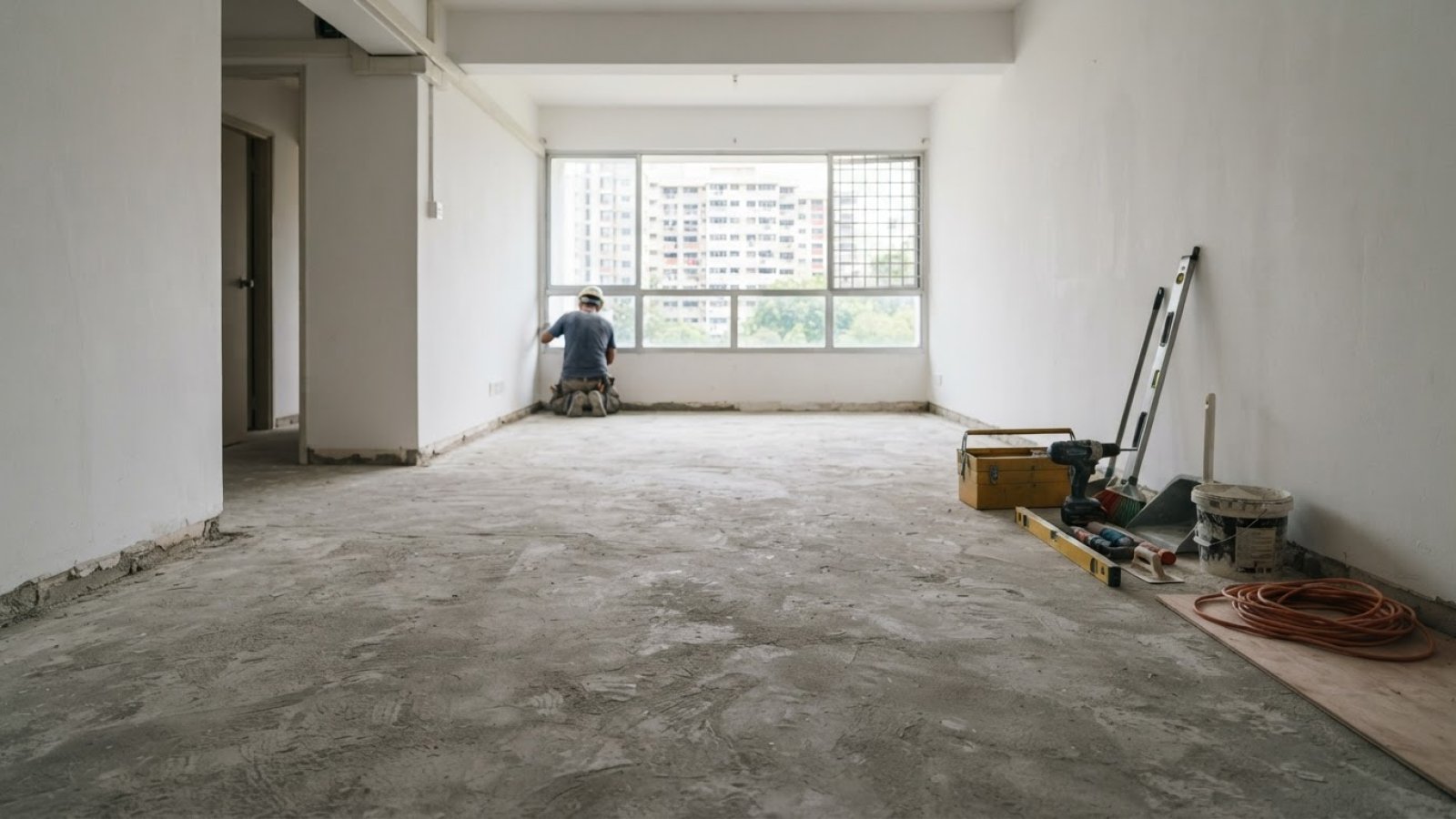
Removing tiles laid by a tenant is a form of demolition work. It involves using tools like jackhammers or rotary hammers to break up the tiles and the adhesive beneath them. After the tiles are removed, the underlying screed needs to be made good. This usually means levelling it and ensuring it's clean and smooth.
It's important to consider the structural integrity of the screed. If the tenant's tiling work was poor, it might have damaged the original screed. Any such damage will also need to be repaired as part of the reinstatement process. We've encountered situations where the screed underneath was uneven or cracked, requiring more extensive repair work.
Proper disposal of the hacking debris is also a significant part of this process. The waste generated from removing tiles can be substantial, and it needs to be managed according to NEA regulations. This includes hiring a proper waste disposal service.
Who Pays for Hacking and Reinstatement?
Typically, the responsibility for the cost of hacking and reinstating the flooring to its original state falls on the landlord, as it's part of returning the property to its initial condition as per the lease agreement. However, this can be negotiated and clearly stated in the tenancy agreement. Some agreements might specify that the tenant bears the cost of removing any additions they made.
It's best practice to have this clearly defined from the outset to prevent disputes. We always advise landlords to be very specific in the contract about what constitutes 'original condition' and who is responsible for the costs of bringing the property back to that state.
If the tenant has caused damage beyond normal wear and tear, or if their renovation work has compromised the original flooring, then they might be liable for the costs. However, simply overlaying tiles is often considered a renovation that needs to be undone if the agreement demands it.
What If the Tenant Used Special Adhesive?
Some tenants might use very strong adhesives for their tiles, which can make removal more difficult. In such cases, the hacking process might take longer and require more effort to ensure all traces of the old tiles and adhesive are gone. It's also possible that the original screed could be damaged during removal if the adhesive is particularly stubborn.
If the original screed is significantly damaged during the removal of tenant-laid tiles, repairs will be necessary. This might involve patching or even re-screeding certain areas to ensure a flat and stable surface for the next tenant or for the landlord's own use. The extent of the damage will dictate the type and cost of repairs needed.
When to Engage Professionals
While some minor hacking and reinstatement tasks can be done by individuals, dealing with flooring in an HDB flat usually requires professional help. This is especially true when you need to ensure the work is done correctly, efficiently, and without causing further damage.
Professional contractors have the right tools and experience to handle tile hacking, debris removal, and screed repair. They understand the regulations for noise and waste disposal. Engaging a contractor also ensures that the reinstatement meets the standards expected by HDB for property handover. We recommend looking for contractors experienced in floor and tile hacking and reinstatement services.
Common Questions About HDB Tiling Reinstatement
Does HDB require original flooring upon lease return?
HDB's regulations focus on maintaining the structural integrity and basic finishes of the flat. The requirement for original flooring typically stems from the tenancy agreement between the landlord and tenant, not directly from HDB rules for the unit itself, unless it pertains to prohibited alterations.
Can a tenant leave their tiles if the landlord agrees?
Yes, if both the landlord and tenant agree, and it's documented, the tenant may be allowed to leave their tiles. This agreement should clearly state that the landlord accepts the altered flooring and waives the requirement for reinstatement of the original finish.
What happens if I don't reinstate the tiles?
If your tenancy agreement requires you to reinstate the original flooring and you fail to do so, you could be in breach of contract. This might lead to disputes over your security deposit, where the cost of professional reinstatement could be deducted.
Is screed reinstatement always necessary?
Yes, after hacking off tiles, the screed needs to be made good. This ensures a level and smooth surface ready for the next tenant or for subsequent flooring to be laid. Leaving a rough or damaged screed is generally not acceptable for a property handover.


