HDB Reinstatement After a Tenancy: A Landlord's Checklist
What landlords should check when a tenant moves out of an HDB flat, what tenants are usually expected to restore, typical costs, and how long reinstatement takes.
Jun Wei
6 min read
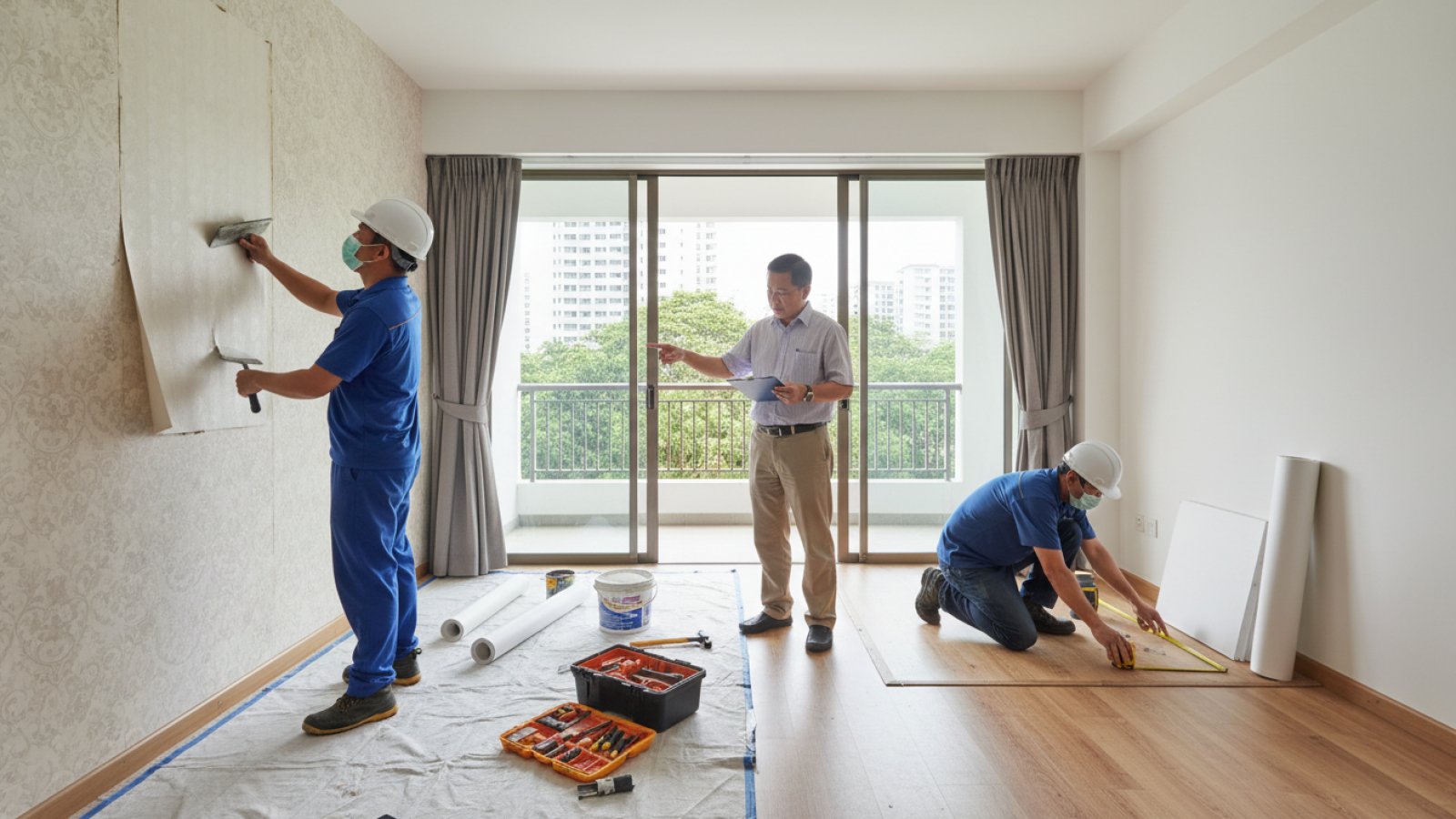
HDB reinstatement after a tenancy means returning the flat to the condition agreed in the tenancy agreement, usually its condition at the start of the lease, allowing for fair wear and tear. For landlords, the work starts before the tenant leaves: a careful inspection against the move-in record decides what the tenant must put right, what the deposit covers, and what you will want to fix before the next tenant. This checklist covers what to check, what tenants are usually responsible for, typical costs, and timing.
What to check at move-out
Inspect the flat with the tenant present, against the inventory and photos from move-in. Go room by room and record everything.
Walls, floors and ceilings
- Holes from nails, screws and wall-mounted items such as TVs and shelves
- Marks, stains and paint damage beyond normal wear
- Cracked, chipped or hollow floor tiles
- Water stains on ceilings, especially below bathrooms and air-conditioning units
Fixtures and fittings
- Built-in carpentry: hinges, doors, drawers and laminate
- Kitchen: cabinets, countertop, sink, hob and hood
- Bathrooms: sanitary ware, taps, shower screens, grout and sealant
- Doors, locks, window grilles and windows
- Lights, switches and power points
- Air-conditioning units, with a check that they have been serviced as agreed
Anything the tenant added
- Shelving, hooks, curtain rails or partitions installed during the tenancy
- Any renovation or alteration, and whether you approved it
- Items left behind that need removing
Photograph each issue and note it on the inventory, with the tenant's acknowledgement where possible. That record is what resolves disagreements about the deposit.
What tenants must restore
Tenants are generally expected to return the flat in the condition it was let in, apart from fair wear and tear. The tenancy agreement sets the exact terms.
That usually means:
- Removing anything they installed, unless you agree it can stay
- Making good holes and damage they caused
- Repairing or replacing items damaged beyond normal use
- Returning the flat clean, with keys and access cards
- Servicing the air-conditioning, if the agreement requires it
Fair wear and tear, such as faded paint, light scuffs and the gradual ageing of fittings, is normally the landlord's responsibility. The line between wear and damage is where most disputes start, which is why the move-in record matters so much.
If a tenant carried out any alteration that needed HDB approval, such as hacking or replacing floor tiles, it must have been approved. As the flat owner, you are responsible for any unauthorised renovation in your flat, so check carefully. Our article on the reinstatement clause explains how to word these obligations in the next agreement.
Before the tenancy starts: set up for an easy move-out
Most move-out problems are solved, or prevented, at move-in.
- A detailed inventory listing every fixture, fitting and furnishing, with its condition.
- Dated photos and video of every room, including close-ups of floors, walls, carpentry and bathrooms.
- Clear clauses on what the tenant may and may not install, and what must be removed at the end.
- A rule on alterations: no drilling into tiles, no structural or permit-requiring work, and written consent for anything else.
- Air-conditioning servicing responsibilities, with a requirement to show receipts.
A landlord with a thorough move-in record rarely ends up in a long dispute over the deposit.
Reinstatement cost
Published market ranges put HDB hacking and reinstatement at about S$1,500 to S$4,000 per job. Most post-tenancy work is lighter than that, and is often repair and repainting rather than hacking.
| Work | Notes |
|---|---|
| HDB hacking and reinstatement, per job | S$1,500 to S$4,000 in published market ranges |
| Removing tenant-installed items and making good | Priced by item after inspection |
| Replacing damaged tiles | Depends on matching availability; a full area may need replacing |
| Repainting | Priced by area and condition |
| Disposal of items left behind | About S$300 to S$500 per small-lorry trip in published ranges |
Where the tenant is responsible, the cost is usually deducted from the security deposit, with receipts or quotes as evidence. Get a written quote before agreeing a deduction, so the figure is fair and documented.
Fixing it yourself vs using the deposit
When the tenant is responsible for damage, there are two common approaches.
The tenant arranges the repairs before handing back the keys. This works when the tenant is organised and the repairs are simple, but the quality varies and you may still need to redo some of it.
The landlord arranges the repairs and deducts the cost from the deposit. This gives you control over quality and timing, and is often simpler. Get a written quote, share it with the tenant, and keep receipts for the work done.
Either way, agree in writing what is being fixed and by whom, before anyone starts.
Preparing for the next tenant
The gap between tenancies is also a good time for maintenance that is hard to do with someone living in the flat: repainting, re-grouting bathrooms, servicing air-conditioning, replacing tired fittings, or dealing with hollow tiles before they crack. A well-presented flat lets faster, and often at a better rent.
Timeline
Allow one to two weeks between the tenant moving out and the next tenant moving in, longer if hacking is involved.
- Before move-out: remind the tenant of their obligations a month ahead, and agree an inspection date.
- Move-out day: joint inspection against the inventory.
- Within a few days: quotes for any repairs, and agreement on deposit deductions.
- Works: light repairs and repainting take a few days. Anything needing an HDB permit, such as replacing hacked floor tiles, adds the approval time of usually one to two weeks.
- Final check before the next tenant's inspection.
Noisy works in HDB flats are only allowed from 9am to 5pm on weekdays, which matters if the gap between tenancies is short.
Common post-tenancy issues in HDB flats
The same problems come up again and again when HDB tenancies end.
- Holes in walls and tiles from TV brackets, shelves and curtain rails
- Damaged carpentry: broken hinges, swollen laminate in kitchens and bathrooms
- Bathroom wear: mouldy sealant, stained grout, damaged shower screens
- Air-conditioning units not serviced, or leaking
- Items left behind, from furniture to bags of rubbish
Most of these are quick fixes when handled together. A contractor who can remove fixings, make good, repair carpentry and clear disposal in one visit saves you coordinating several trades.
Getting it done
Our end of lease reinstatement service covers inspection, removal of tenant additions, making good and disposal, so the flat is ready for the next tenant. Request a quote with photos from your move-out inspection.
Sources
- Published Singapore hacking contractor cost guides, 2026: HDB hacking and reinstatement per job, lorry trip costs.
- MyNiceHome (HDB): owner responsibility for renovation permits, noisy works hours.


