Toilet and Bathroom Hacking Cost in Singapore (HDB and Condo)
What toilet hacking covers, what drives the cost for floor-only, full strip and bathtub removal jobs, the waterproofing rules, and how long it takes.
Jun Wei
7 min read
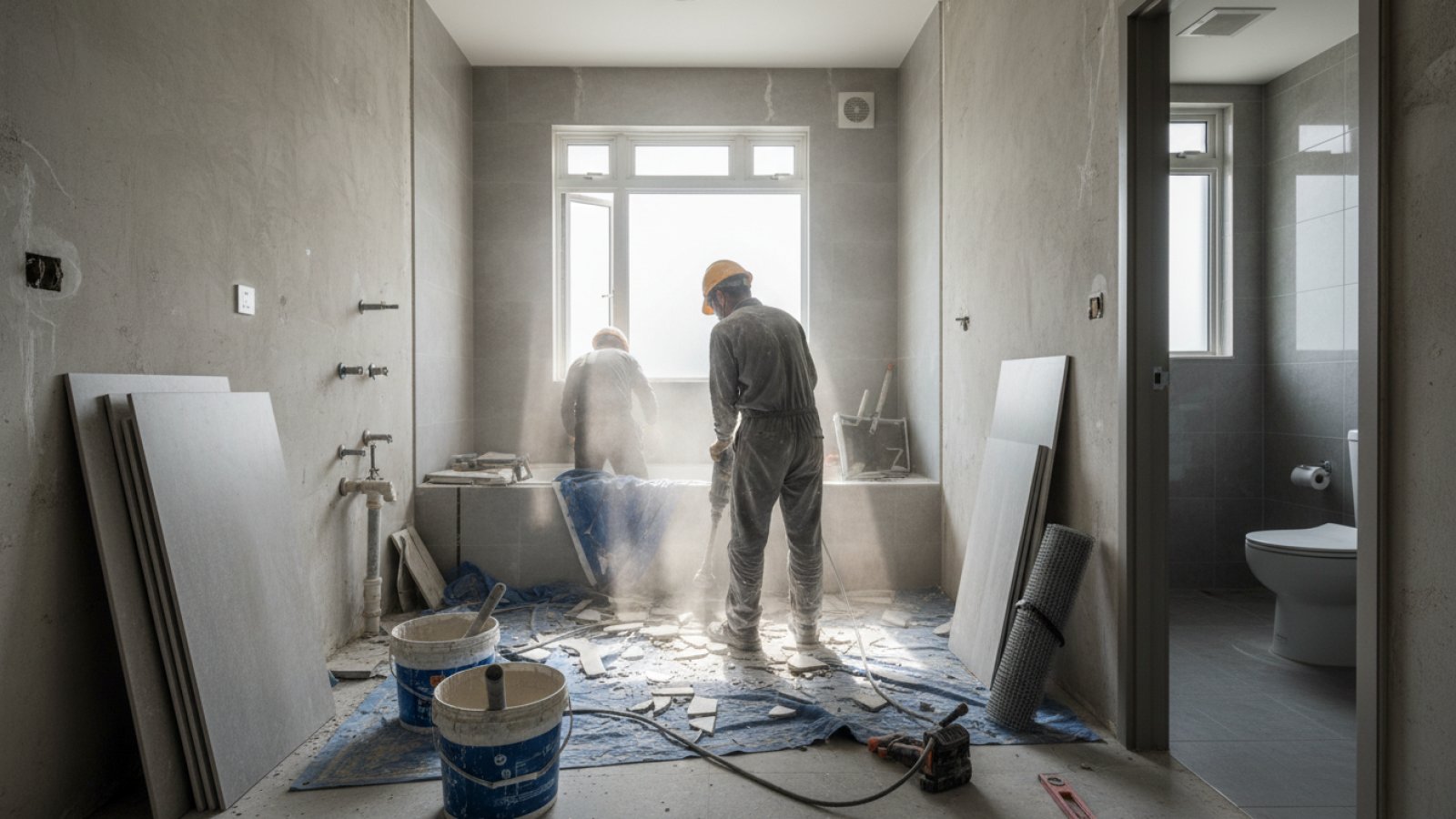
Toilet hacking cost in Singapore depends more on scope than on size. Removing only the floor tiles is a much smaller job than stripping the walls, floor, fittings and bathtub, and every toilet hacking job that goes down to the screed also carries the cost of redoing the waterproofing. Unlike wall and floor hacking, there is no reliable published price for a complete toilet strip, so this guide explains what goes into the cost instead, with the published rates that do apply.
For a firm figure, a survey or a good set of photos is needed. Everything below is general guidance, and the published figures quoted are market ranges, not our prices.
What toilet hacking covers
Toilet hacking is the removal of a bathroom's finishes and fittings back to a base that can be waterproofed and re-tiled.
A full strip usually includes:
- Removing sanitary ware: WC, basin, vanity, shower screen and accessories
- Removing wall tiles, often to full height
- Removing floor tiles and the screed beneath
- Removing a bathtub or shower tray, if there is one
- Removing a false ceiling or ceiling boards
- Bagging and disposing of all debris
It usually does not include plumbing changes, the new waterproofing, re-screeding, re-tiling or new fittings. These are separate trades, often priced by the renovation contractor or interior designer.
Toilet hacking cost by scope
The three common scopes are floor only, walls and floor, and a full strip with bathtub removal. Each step up adds hacking time, debris and follow-on work.
Floor only
Removing only the floor tiles and screed, keeping the wall tiles. The hacking part follows the published floor tile rates of about S$3 to S$8 per square foot, with screeding about S$1 to S$3 psf afterwards. A toilet floor is small, though, so fixed costs such as protection, setup and disposal make up most of the bill, and the per-square-foot rate on its own understates the job. The waterproofing must be redone once the floor is hacked.
Walls and floor
Removing all wall and floor tiles, usually so the whole bathroom can be re-tiled in one style. Wall tiles take time to remove cleanly without damaging the wall behind, and full-height tiling roughly triples the area compared with the floor alone. The wall surface usually needs patching before new tiles go up.
Full strip with bathtub removal
Everything above, plus removing a bathtub. Built-in bathtubs are often encased in brick or blockwork and tiled, so removing one is a small demolition job in itself, with heavy debris. The floor beneath has to be built up and waterproofed where the tub stood, and the drainage may need adjusting for a shower.
What else moves the price
- Number of toilets. Two bathrooms done together share protection, setup and disposal, so the second costs less than the first.
- Layers of tiles. Older flats sometimes have new tiles laid over old, which doubles the hacking.
- Access and floor level. Debris has to travel through the flat and down the block.
- Disposal. Published ranges for a single small-lorry trip with labour and compliant disposal are about S$300 to S$500.
Rather than quote a figure we cannot source, we price toilet hacking from photos or a visit. It usually takes a few minutes to see the scope clearly. See our hacking price list for the job types that do have published ranges.
Waterproofing and the HDB rules
Once a toilet floor is hacked to the screed, the waterproofing must be redone and tested before re-tiling. This is the most important part of any toilet hacking job.
Bathroom floors have a waterproofing membrane within the floor build-up. Hacking disturbs or removes it, and a toilet without intact waterproofing will eventually leak into the flat below. Leaks from bathrooms are among the most common causes of disputes between neighbours after a renovation, and they are entirely preventable.
A properly done job typically involves:
- Hacking to a sound base and cleaning it
- Applying the waterproofing membrane across the floor and up the walls at the junctions
- Paying particular attention to the floor trap, pipe penetrations and corners
- A water ponding test, where the floor is flooded and checked for leaks, before tiling
- Screeding to the correct falls and re-tiling
For HDB flats, removing bathroom floor and wall tiles is hacking work that needs a renovation permit. HDB's guidelines also restrict replacing bathroom floor finishes in the first three years after a block is completed. Confirm the current rules with HDB before you plan. Our article on waterproofing and floor hacking damage goes into more detail.
In a recent condominium job, we removed the bathroom wall and floor tiles and the screed, then inspected and reported on the condition of the waterproofing membrane before handing over to the re-tiling contractor. That report tells the next trade exactly what they are working with.
Timeline
The hacking for a single toilet usually takes one to two days. Waterproofing, testing and re-tiling take longer than the hacking itself.
- Permit: obtained before work starts, usually within one to two weeks for HDB flats.
- Hacking: one to two days per toilet, depending on scope.
- Waterproofing and ponding test: application plus curing and testing time.
- Screed and tiling: several more days, including curing.
Noisy works such as tile removal are only allowed from 9am to 5pm on weekdays in HDB flats, and never on weekends, public holidays or the eve of major public holidays. In practice, a bathroom renovation from hacking to finished tiles usually takes one to two weeks, with the bathroom out of use throughout. If the flat has only one toilet and you are living in it, plan for that.
HDB and condo differences
The hacking itself is similar, but the rules and logistics differ between HDB flats and condominiums.
In HDB flats, bathroom hacking needs an HDB renovation permit and a contractor listed in HDB's Directory of Renovation Contractors. The three-year restriction on replacing bathroom floor finishes in new blocks applies, and noisy works are limited to weekday working hours.
In condominiums, the MCST approves the works, usually with a renovation application, a deposit and set hours. Debris removal through the lift is often restricted to specific slots. Condo bathrooms sometimes have larger areas of stone or full-height tiling, which adds hacking time. Waterproofing is just as important; a leak into the unit below causes the same dispute whatever the tenure. See our condo hacking page.
Common toilet hacking mistakes
Most toilet renovation problems trace back to a few avoidable mistakes at the hacking stage.
- Hacking through the membrane without planning to redo it. The waterproofing must be priced and scheduled from the start.
- Skipping the ponding test. It is the only way to find a leak before the tiles hide it.
- Damaging pipes in the wall or floor. Concealed pipes need locating before hacking near them.
- Leaving the floor trap unprotected. Debris down the trap causes blockages that are hard to clear.
- Starting before approval, or within the three-year period for a new flat.
Getting a firm quote
Send photos of each wall and the floor, the flat type and floor level, and tell us whether a bathtub or shower tray is to come out. We will confirm the scope, the permit requirements and the price. Our bathroom and toilet hacking page explains the service.
Request a toilet hacking quote.
Sources
Figures are published market ranges, reviewed October 2026, and are indicative only.
- SmartCalculator.sg, Flooring Cost Singapore (2026): floor tile hacking and screeding rates.
- Published Singapore hacking contractor cost guides, 2026: lorry trip and disposal costs.
- MyNiceHome (HDB): renovation permits and noisy works hours.


