Waterproofing and Floor Hacking: The Damage That Shows Up Later
The most common post-renovation dispute between neighbours starts with a waterproofing membrane breached during tile removal, and only becomes visible weeks afterwards.
Chris Tan
Updated September 2026 3 min read
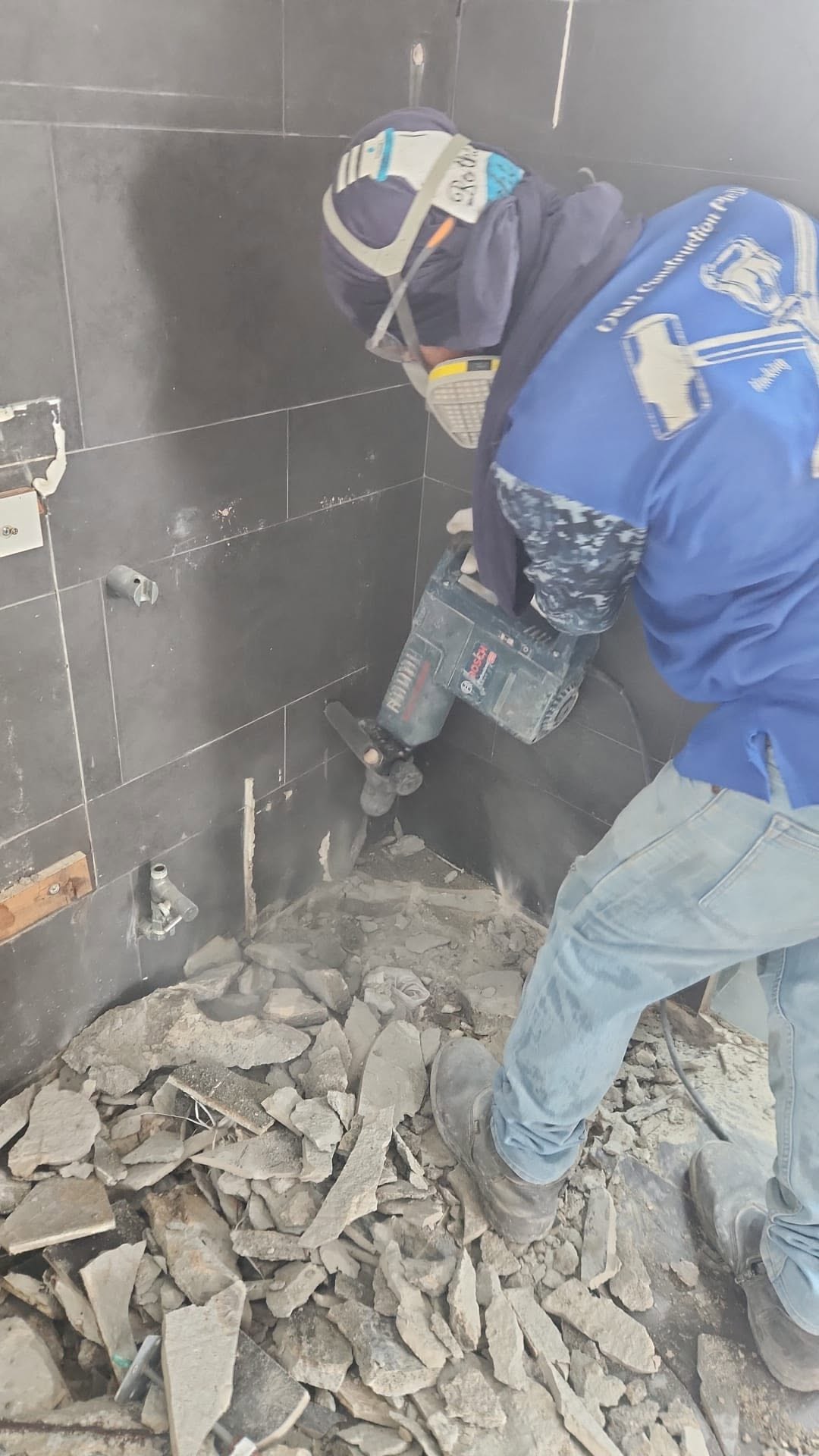
Most renovation problems announce themselves immediately. This one does not. It surfaces weeks after the job is finished, as a stain on somebody else's ceiling, and by then the new bathroom is complete and fixing it means taking it apart again.
Where the membrane sits
In bathrooms, service yards and kitchens, a waterproofing membrane is laid over the structural slab. Screed goes on top of the membrane, and tiles on top of the screed.
The membrane is the layer that stops water reaching the slab. Everything above it is expected to let some water through over time, which is why the membrane exists at all.
How it gets breached
During tile removal, the aim is to take off the tiles and their bedding while leaving the membrane intact. Going too deep, or working too aggressively with a demolition hammer, cuts through it.
A breach is often small and easily missed. The membrane is not always obvious once covered in debris and dust, and if nobody is specifically looking for damage, nobody finds it.
Why it takes weeks to appear
Water has to work through the new screed and tile bed, find the breach, pass through the slab and appear on the ceiling below. That takes time, usually weeks of normal bathroom use.
By that point the tiler has finished, the sanitary ware is installed and the job is signed off. The neighbour below notices a damp patch, and the investigation works backwards from there.
Why it becomes a dispute
The damage is in your flat, the symptom is in theirs, and establishing cause requires opening up work that was recently completed. Repairs involve stripping the new bathroom back to the slab, reinstating and testing the membrane, and re-tiling.
There is also a liability question between owner and contractor about who bears the cost, which rarely resolves quickly.
How it is prevented
Three things, none of them complicated:
Work to the tile bed rather than through it. The objective is removing the tiles and bedding while leaving what is beneath intact. That requires a different approach from breaking out a floor.
Inspect the membrane once the tiles are off. This is the moment when damage is visible and cheap to address. It takes minutes.
If it is disturbed, reinstate and test it. A ponding test, where the area is flooded and checked over a period, confirms the repair before new finishes go down.
Questions worth asking
Before bathroom or kitchen floor hacking begins, ask how the membrane will be protected, whether it will be inspected once tiles are off, and what happens if it is found damaged.
A contractor who has a clear answer has thought about it. One who has not considered it at all is the risk.
Screed removal limits
Separately from the membrane, HDB limits how much screed may be removed, because it contributes to floor loading and build-up. Those limits vary by flat type and area, and should be checked against your specific flat rather than assumed.
Chris Tan
Site Supervisor
Chris supervises hacking and strip-out works on HDB and BTO sites across Singapore. He handles permit submissions and coordinates with town councils on renovation hours and debris removal.


