How to Check for Pipes and Wires Before Hacking a Wall in Singapore
A practical guide to identifying hidden pipes and electrical conduits in your walls before any hacking work begins, to prevent dangerous and expensive damage.
Jun Wei
5 min read
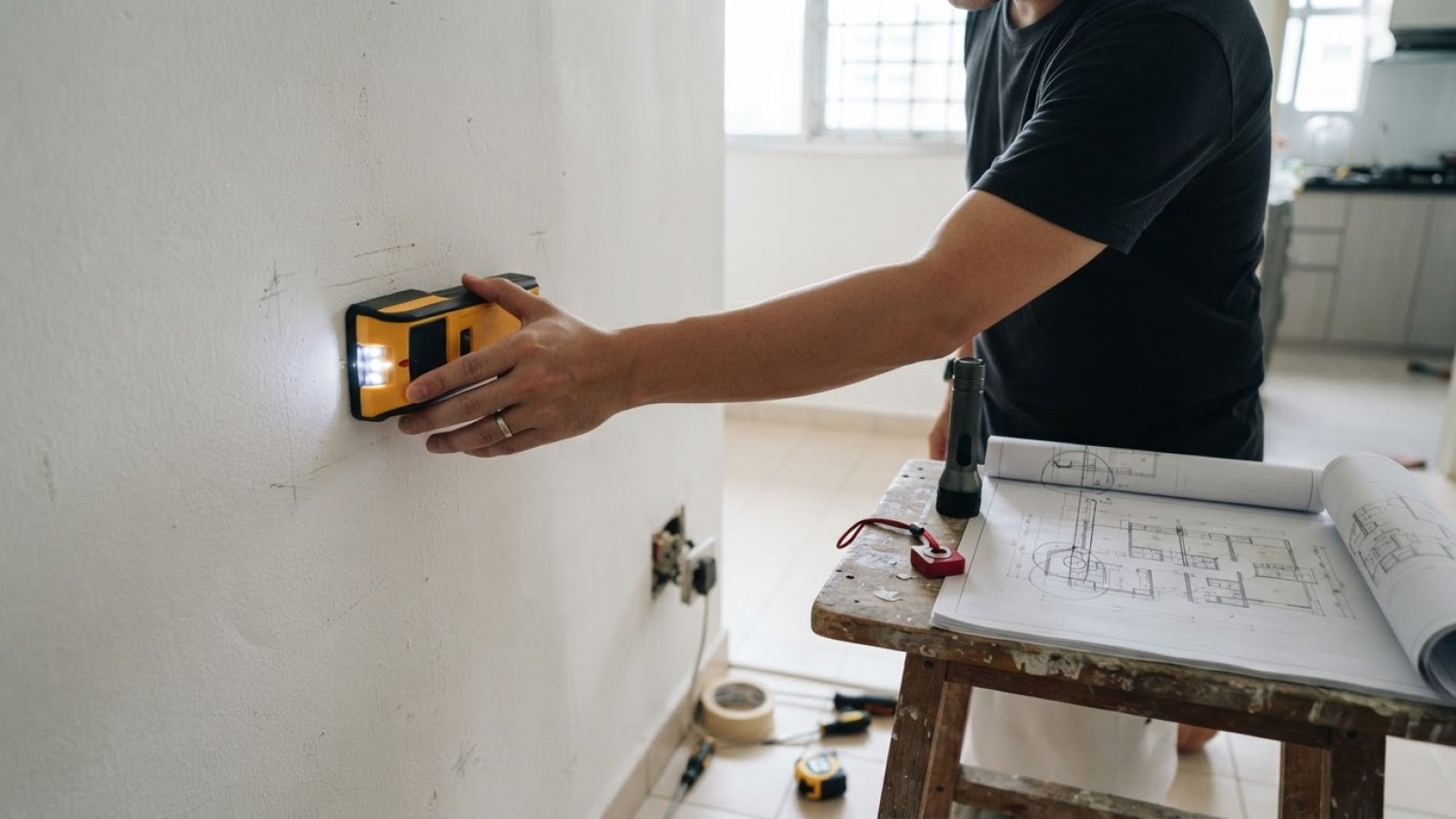
Before you swing a hammer at that wall, you need to know what's inside. Hitting a pipe or wire means floods, sparks, and bills you'll be paying for months. We use thermal cameras and cable detectors, but you can map most of the risk yourself with some observation and common sense.
Here's how we do the detective work.
Why Guessing Isn't an Option
Cut a live wire and you risk a fire or a shock. Sever a pressurised water pipe and you'll flood your flat and probably the one below. The repair is just the beginning. You're on the hook for fixing the utility, your wall, and your neighbour's ruined ceiling. The hidden costs of accidental damage add up fast with plumbers, electricians, and restoration work. It's a mess you can avoid.
Step 1: Study the Blueprints
Start with the as-built drawings. For HDB flats, buy them from the HDB Branch Office. In a condo, ask the MCST. They won't show every single wire, but they will show the main routes for the soil pipe, waste lines, and water supply. Trace the horizontal pipes from your bathroom and kitchen back to the main stack. That gives you the no-go zones.
Just remember, any unauthorised work by a previous owner won't be on these plans. So you need to look further.
Step 2: The Visual and Logical Survey
Walk the flat and think like a pipe. Start from the known points.
- Follow from the source. Look under the kitchen sink. See where the pipes enter and vanish into the wall. In the bathroom, look at the toilet, basin, and shower. The pipes will run straight back to the main stack, usually in a wall or the false ceiling.
- Look for clues on the wall. Check for bulges, uneven plaster, or long vertical cracks. Tap it. A hollow sound suggests a stud wall or channel. A solid thud is concrete, which can still have conduits inside.
- Consider the building’s anatomy. In HDB flats, the main pipes and electrical risers are in the kitchen, bathrooms, and service balcony. You won't find a soil pipe in your living room wall, but smaller supply pipes or wires could be there.
- Check the other side. This is often missed. Go to the next room. If there's a toilet or a switch point on the other side of your target wall, assume utilities are running through it.
Step 3: Simple Tools for Detection
You don't need a S$5,000 scanner. A few basic tools help.
- A Stud/Metal Detector: A cheap magnetic stud finder locates nails in wooden studs. Models with AC detection can sometimes find live wires behind plasterboard, but they're unreliable on concrete. The rebar inside gives false readings. Use it as a hint, not a guarantee.
- A Strong Magnet: Drag a neodymium magnet on a string along the wall. If it sticks, you might have found a metal pipe or stud.
- A Bright Torchlight at an Angle: Shine a light sideways across the surface. This raking light shows up seams and patches where channels were cut and filled, which is where wires or pipes often hide.
This process is your basic wall scanning for renovation. These tools help you guess better. They don't give an all-clear.
Step 4: When to Call a Professional
Know your limits. Call a pro with proper gear when:
- The wall might be structural (check that first).
- Your survey shows high risk (multiple utilities likely converge).
- You're doing deep hacking near bathrooms or the kitchen.
- You're just not sure.
A good contractor uses a multi-sensor detector that tells live wires from metal pipes from plastic. That's the proper utility detection before demolition for risky jobs. It's a worthwhile cost. Here's how to choose a qualified hacking contractor who has the right tools.
The Critical Final Check: Isolating Water and Electricity
This is your safety net. Do it before the first strike.
Turn off the main water stopcock at your meter. Open a tap to drain the line and confirm it's off. If you hit a pipe now, it'll only leak residual water, not flood under pressure.
Switch off the correct circuit breaker at your DB box for that area. If you can't isolate it, turn off the main switch. Then use a voltage tester on outlets and switches on that wall to confirm they're dead. Never assume.
This turns a potential disaster into a manageable leak.
FAQs: Answering Common Concerns Before You Hack
Can I use a stud finder to detect pipes and wires in Singapore walls?
You can, but don't trust it. Basic magnetic finders only find metal studs or nails. Electronic ones can sometimes find live wires or metal pipes, but the rebar in our concrete walls confuses them. You get false alarms or miss the hazard entirely. Use it only after your visual check, not as your main method.
What happens if I accidentally cut through a water pipe during hacking?
Shut off the main stopcock immediately. You're liable for everything. That means hiring a plumber to fix the pipe, repairing the wall, and fixing any water damage to your flat and your neighbour's ceiling below. They can claim against you for the costs. It's a serious problem.
Who is responsible for damage to concealed utilities during renovation?
The contractor is responsible. A competent one always checks first. If you're doing it yourself as the owner, the liability is entirely on you. That's a key reason to hire a professional for risky hacking. They have the insurance and expertise to handle it.


