Hidden Costs of Wall Hacking in Singapore: Water, Dust & Reinstatement
Avoid budget blowouts by understanding the hidden costs of wall hacking renovation in Singapore, including dust containment, utility disconnections, and repairs to adjacent surfaces.
Jun Wei
6 min read
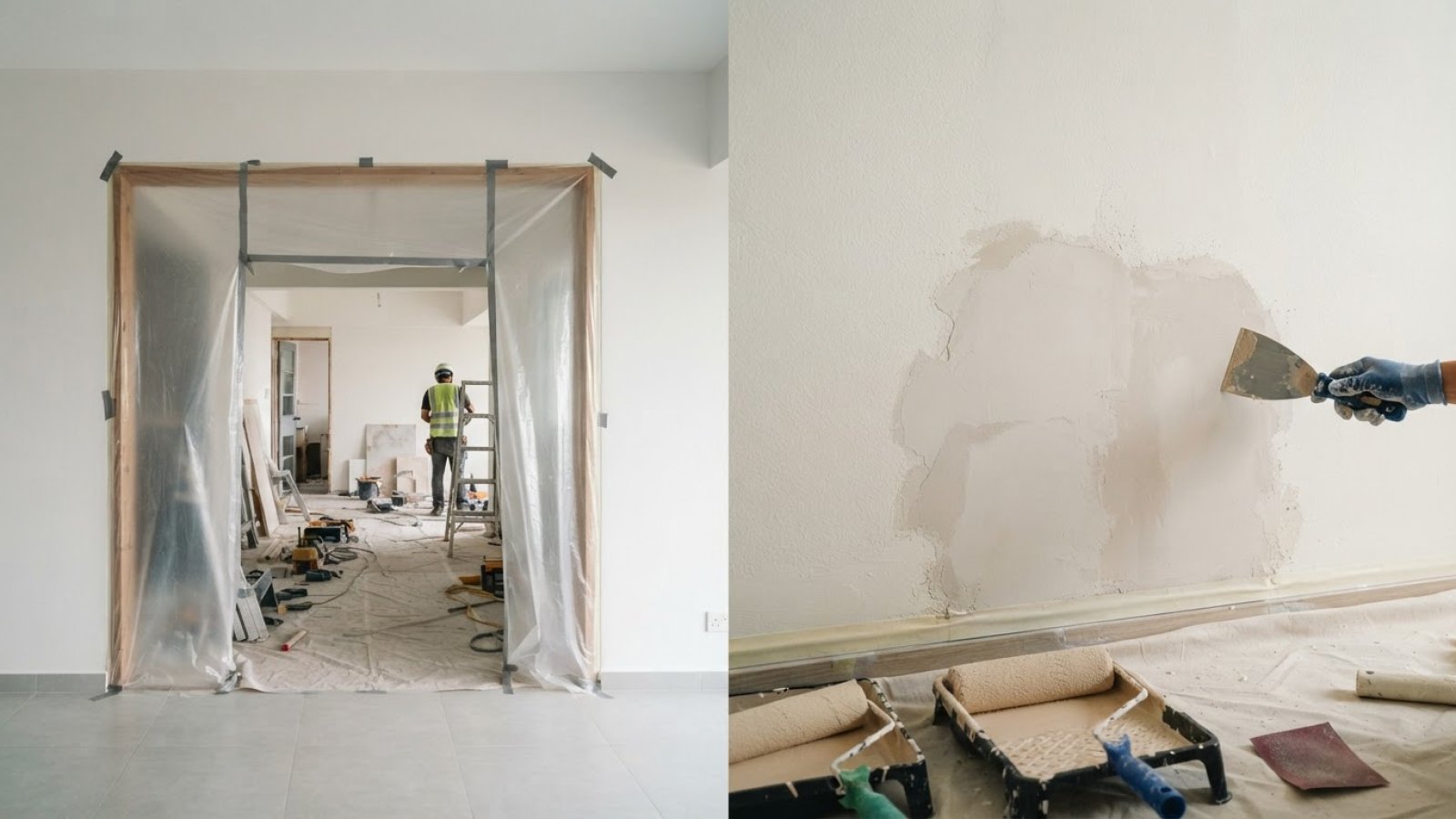
You request a quote to knock down a partition wall. They hand you a figure for demolition alone. The rest sits outside that line item. You will foot the bill for heavy plastic sheeting, replacing cracked coving, isolating live circuits, and feathering paint across surfaces that never saw a tool. The **hidden costs of wall hacking renovation singapore** project owners usually overlook sit right there.
Water Damage and Adjacent Repairs, Fixing What You Did Not Touch
Swing a pickaxe near load bearing joints and the whole slab shivers. You feel nothing. The concrete feels everything. Hairline splits appear along skirting and door architraves within hours. You cannot skip fixing those before rolling fresh paint. We always pull back the baseboards first. Damp patches near shared bathroom walls show up fast. Moisture migrates through aged mortar when you breach the structure. You can read more about the waterproofing risks after hacking to understand how old membranes fail under sudden structural stress. Plaster needs two weeks to cure properly. Rush it and the skim coat peels off anyway. Vibrations pack dust into untouched textures too. You will see shadow lines. Sand those zones flat. Apply a primer base coat. Skip it and the shadows return.
Dust Containment Setups, The Invisible Infrastructure You Must Pay For
The NEA demands tight particulate control the moment you break brick or concrete. Opening a window does not clear silica dust. It drifts into hallways and settles on neighbours’ televisions and rugs. One complaint brings a penalty notice. Building management shuts your site down.
We drape thick polyethylene around the cutting area. Masking tape seals every seam. We stack a second layer at the doorway so workers do not tear through it. Larger jobs run a portable air scrubber non stop. The machine pulls dirty air through HEPA filters and vents filtered air into the corridor. The **dust containment** system looks cheap online. (It usually isn’t.) On site it demands serious labour and spare parts. You must also budget for wiping down the common corridor afterward. Management denies tool delivery until the inspector stamps it clean.
Utility Disconnections, Fees for Temporarily Cutting Power, Water, and Gas
You cannot swing metal near live wires. SP Services needs a written isolation request before we touch anything. PUB manages the water mains. Gas lines fall under SP Services jurisdiction. Every agency bills separately for meter capping or removal. These are statutory payments. You pay the network operator directly, not us.
Missing a single meter doubles your downtime. We submit all three requests at once to keep the schedule moving. Processing times vary wildly. Grid connections sometimes drop for forty eight hours. Water and gas lines take three working days minimum. Clear the room first. Drain the fridge pipes. Empty the overhead tanks. Leaving gear plugged in during blackout trips warranties and sparks fires. We hold our hammers until the isolation certificates hit our email.
Reinstatement Scope Creep, How Neighbouring Surfaces Increase the Bill
Demolition finishes when the rubble clears. The rebuild phase swells quietly. You mark out two metres for fresh plaster. The fracture traces six metres across the ceiling. Old conduit snakes deeper than planned. You have to chase new channels. Impact shatters floor tiles right next to the new aperture. Prying them up exposes brittle screed that cracks under pressure.
Buildings settle differently than blueprints predict. We walk the perimeter before we strike. We chalk the patching limits and point out thin plaster zones. Matching old tiles costs extra. Factory kilns changed formulas years ago. New stock never reads the same shade. Staircase landings take hits too. Shockwaves travel through slab edges. Tiles pop near the lift shaft. Book professional reinstatement services early so late change orders do not spike the ledger. We track every roll of tape and bag of cement against your original scope.
Negotiating Comprehensive Quotes, A Checklist for Homeowners and Landlords
Line item quotes hide the real workload. You need stage by stage transparency. Demand a spreadsheet that lists demolition, authority applications, barrier erection, and final finishes. Match each task to the relevant agency rule. If dust control sounds bundled, ask for the spec sheet. Are we talking loose polythene or a sealed negative pressure chamber? Does the rate include corridor restoration or just your apartment threshold?
Clarify who files the paperwork. Only licensed tradespeople can legally isolate mains. The SCDF fines unregistered hands hard. Push for the repair standard too. We do not scratch sound walls with wire brushes and call it done. The grooves glow under porch lights. Full sanding and priming take half a working day minimum. We issue clear figures upfront so change orders never spark arguments. You can check tips on choosing a reliable contractor by comparing how they handle vibration limits and corridor sweep protocols. Those habits separate regular firms from weekend crews.
Budgeting for the Whole Process, Not Just the Hammer
Demolition eats thirty percent of the budget. The other seventy covers permits, barriers, utility routing, and patching undamaged zones. Fund allocation hinges on block age, brick thickness, and wet area proximity. Ten year old HDB slabs need vibration gauges. Condos with strict MCST bylaws enforce tighter noise windows and designated skip locations. Commercial fit outs demand fire rated gaskets instead of basic polythene.
Map the sequence before you sign. Isolate first. Contain second. Hack third. Patch fourth. Paint last. Drop a step and you pay twice. We log every deviation against your baseline scope so surprises stay narrow. Email the authority directly before mobilising. Guidelines change quietly. A quick query saves weeks of rework. Keep your contingency cash liquid. Substrate defects only show once the plaster comes off.
Frequently Asked Questions About Wall Hacking Expenses
Does wall hacking damage waterproofing in bathrooms or kitchens?
It usually does. Shockwaves snap aged membranes and split the cove beads at floor junctions. Breach that seal and water climbs through hollow cavities. Ceilings stain fast. We pressure test existing waterproofing before cutting near wet rooms. We recoat the substrate if the old layer feels brittle.
How much does dust containment setup cost for a standard HDB flat?
Costs hinge on room volume, ceiling height, and filter requirements. Taped polythene sheets handle small bedrooms cheaply. Master suites need steel bracing and running HEPA scrubbers to meet NEA limits. Labour rates swing heavily depending on sealing complexity and material thickness.
Why do contractors charge extra for repairing adjacent painted walls?
Dust packs into textured finishes and splits skirting joints. Quick filler peels off within months. Proper **adjacent surface repair** requires grinding, priming, and feathering compound across wide spans. Labour hours and material usage jump sharply when we work past the damage zone.
Are utility disconnection fees included in standard wall hacking quotes?
Almost never. Grid and water authorities bill separately for meter capping. Licensed tradespeople process these applications outside the main contract. You need statutory cash ready upfront. Alternatively, let the renovation crew file the paperwork and absorb a small admin markup.


