How to Choose a Hacking Contractor in Singapore: A Checklist
The checks that matter when choosing a hacking contractor: HDB listing, licences, insurance, what a good quote shows, red flags, and the questions to ask.
Jun Wei
7 min read
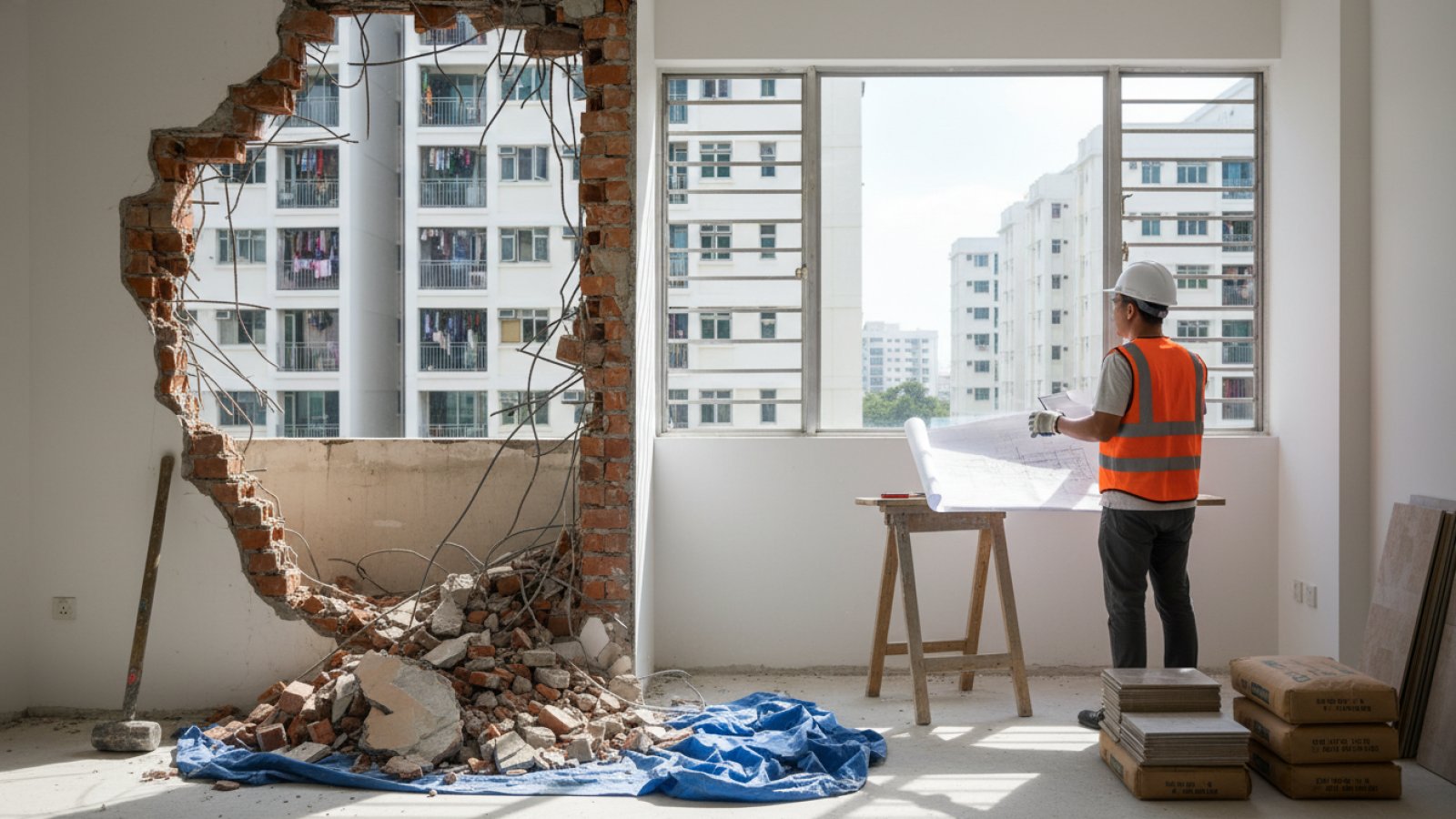
Choosing a hacking contractor in Singapore comes down to a few checks you can do in an afternoon: whether they can legally do the work in your property, whether they are insured, and whether their quote tells you exactly what you are paying for. Hacking is the stage of a renovation where mistakes are hardest to undo, because a wall or waterproofing membrane cannot be put back the way it was. This checklist covers what to verify, what a good quote looks like, the red flags, and the questions to ask.
Check HDB listing and licences
For an HDB flat, the contractor must be listed in HDB's Directory of Renovation Contractors. This is not optional.
Hacking works in an HDB flat need a renovation permit before they start, and the work must be carried out by a contractor on HDB's directory. As the owner, you are responsible for making sure the permit is in place; the listed contractor normally submits the application on your behalf. If someone is not on the directory, they cannot do the work legally, however good their price. You can check the directory on HDB's website in a minute.
Also ask about licences. Building contractors in Singapore may hold licences from the Building and Construction Authority (BCA) for the type of work they carry out. Ask which licences the contractor holds and check them on BCA's public directory. Our licences are listed on our about page.
For condominiums, the MCST will usually ask for the contractor's details and insurance as part of the renovation application. For commercial premises, building management sets its own requirements.
Insurance and bizSAFE
A hacking contractor should carry insurance that protects you, your neighbours and their workers. Ask for it in writing.
- Public liability insurance covers damage to your property, neighbouring units and common areas, and injury to third parties. Hacking can crack tiles next door or damage a lift; this is what pays for it.
- Work injury compensation insurance is required by law for workers doing manual work. If a worker is injured on your site, this is what covers them.
- bizSAFE is a Workplace Safety and Health Council programme that shows a company has put a safety management process in place. It is a useful indicator, and many commercial buildings require it.
What a good quote shows
A good quote tells you exactly what will be removed, what is included, and what is not. If you cannot tell what you are paying for, neither can anyone else.
Look for:
- A specific scope. Each wall, floor area or item described, with approximate measurements.
- The pricing method. Per foot run, per square foot or metre, or lump sum, so you can compare.
- Protection. Inside the flat, and of lifts and common areas.
- Disposal. Included or separate, and how many trips.
- Permits. Who applies, and whether any PE endorsement is allowed for.
- Making good. Included or excluded.
- Exclusions. Electrical, plumbing, waterproofing and finishes clearly listed if not included.
- Timeline and payment terms. When work starts, how long it takes, and when payments fall due.
Compare quotes line by line against this list, not just on the total. Our hacking price list gives typical market ranges for common jobs, so you can see whether a quote is in a sensible range.
Red flags
Most bad hacking jobs were signalled at the quote stage. Watch for these:
- Not on HDB's directory, for HDB work. Stop there.
- "No permit needed" for work that clearly needs one, such as hacking walls or floor tiles in an HDB flat.
- Quoting without seeing the wall or the structural plan, especially for wall removal.
- A price far below the others, with disposal, protection or making good missing.
- Large upfront payment before any work has started.
- Vague scope, such as "hacking works" with no detail.
- No mention of waterproofing on a bathroom job.
- Pressure to decide quickly. A genuine contractor will give you time to compare.
Unauthorised hacking in an HDB flat can lead to a fine of up to S$5,000 and an order to reinstate the work at your own cost. That risk sits with you as the owner, not just with the contractor.
Questions to ask
Ten questions that quickly separate careful contractors from the rest:
- Are you listed in HDB's Directory of Renovation Contractors?
- Which BCA licences do you hold?
- Can I see your public liability insurance certificate?
- Will you check the structural plan before quoting for wall removal?
- Who submits the permit, and how long will approval take?
- Does this job need a PE endorsement, and is it in the price?
- Is disposal included, and where does the debris go?
- How will you protect the lift, corridor and my neighbours' doors?
- What happens if you find something unexpected once work starts?
- Can you show me photos of similar jobs you have done?
The answer to question 9 is particularly telling. Hacking often uncovers surprises, such as hidden pipes, hollow screed or old water damage. A good contractor explains how they would handle them and how any extra cost would be agreed before it is incurred.
Checking past work
Photos and references tell you more than any claim on a website.
Ask to see photos of similar jobs, ideally before and after, with a description of what was done. A wall removal, a bathroom strip or a full flat strip-out each tests different skills. Ask how long the job took and whether anything unexpected came up. If the contractor has worked in your building or estate before, they will know its management, lifts and rules, which helps.
Reviews on Google and other platforms are useful, but read the detail rather than the star rating. Look for comments on punctuality, cleanliness, communication and how problems were handled, since every renovation has some.
Contracts and payment terms
Get the agreement in writing before work starts, and keep payments tied to progress.
- A written quote or contract with the scope, price, exclusions, timeline and payment schedule.
- A reasonable deposit, with the balance due at stages or on completion, not everything upfront.
- A clear variation process, so any extra work is agreed and priced in writing before it is done.
- Who holds the permit documents, and that you receive copies.
- What happens at handover: a clean site, debris cleared, and any issues found during the work reported to you.
Hacking contractor or renovation contractor?
You can engage a hacking contractor directly, or through your interior designer or main renovation contractor. Both work.
Engaging directly gives you more control over the hacking stage and a direct line to the people doing the work. Going through your designer keeps the whole renovation under one coordinator. Either way, the same checks apply to whoever actually carries out the hacking: HDB listing, insurance, and a clear scope.
Timelines are part of the choice
A contractor who promises to start hacking tomorrow in an HDB flat has skipped the permit. Approval usually takes one to two weeks, and a month or more if a PE endorsement is needed. Noisy works can only run from 9am to 5pm on weekdays. Build these into your plan, and be wary of anyone who does not.
Our HDB hacking permit guide explains the process in full.
Working with us
We are a hacking contractor in Singapore for HDB flats, condominiums, landed homes and commercial premises. We check the wall before quoting, handle the permit submission, protect common areas, and dispose of debris at licensed facilities. Ask us any of the questions above. Request a quote.
Sources
- MyNiceHome (HDB), How to Renovate Your HDB Flat: permit responsibility and the Directory of Renovation Contractors.
- PropertyGuru, HDB Renovation Permits in Singapore: permit requirements for hacking works.
- Qanvast, The Complete Guide to Hacking: permit timelines with and without PE endorsement.


