Temporary Partition Walls in Singapore for Renters & Offices
Looking for temporary partition walls in Singapore? We look at the different types available, perfect for renters and offices needing flexible space solutions.
Jun Wei
5 min read
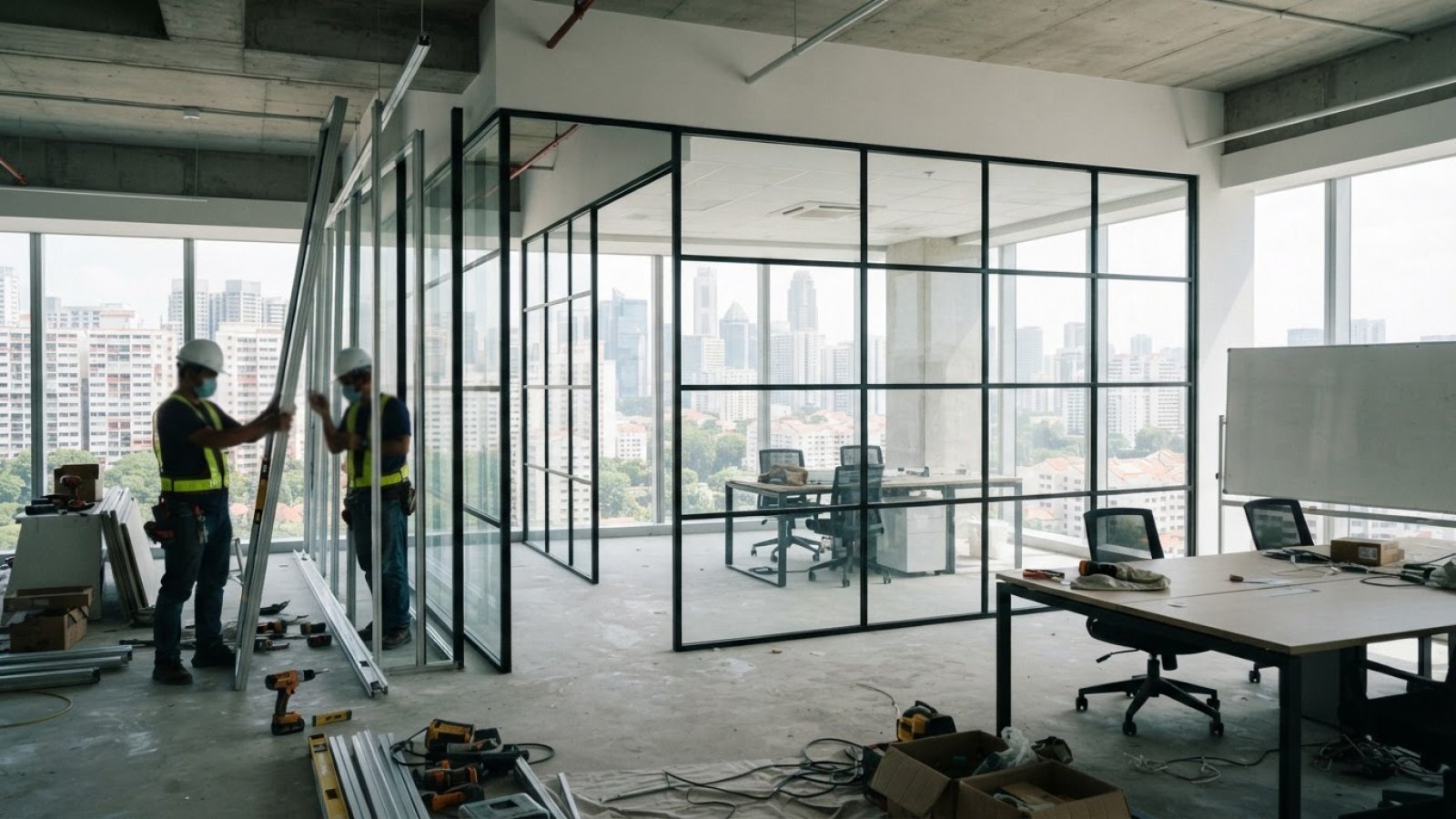
Flexible Space: Temporary Partition Walls in Singapore
Need to divide a space quickly? Maybe for a rental, an office setup, or an event? Temporary partition walls are a practical solution. These aren't permanent brick walls. They install and remove easily. That means flexibility without major structural changes. This is handy in Singapore's rental market. It's also good for businesses that reconfigure office layouts often.
Most people choose temporary partitions because they're cost-effective and quick to install. You can create separate rooms or zones without long-term commitment. Often, you won't need extensive renovation permits either.
Types of Temporary Partition Walls
Several types of temporary partition walls are available.
- Movable Walls: Lightweight. Aluminium frames with glass, melamine, or fabric panels. They wheel or slide into place. Some stack away neatly.
- Demountable Walls: Like movable walls, but designed to be taken apart and put back together. Think interlocking panels. They offer a more permanent look but are still removable.
- Screen Partitions: Often freestanding panels, sometimes on castors. They create visual separation. Least permanent and easiest to move.
- Fabric or Canvas Partitions: Used for events or temporary retail. Framed structures covered in fabric. They offer a softer visual break.
- Glass Partitions: Framed glass panels look sophisticated. They maintain a sense of openness. They can be fixed or sliding. Some offer good acoustic properties.
Your choice depends on budget, desired look, and how often you'll move them. Offices often use demountable or framed glass. Renters might prefer simpler, portable options.
Benefits for Renters and Landlords
Temporary partitions are a lifesaver for renters. Leasing a commercial space or even a room? You usually can't make permanent alterations. Temporary walls let you:
- Create separate work areas or private offices in an open-plan space.
- Divide a living area into zones, like a study nook or dining area.
- Add a temporary bedroom without structural work.
- Return the space to its original state easily when your lease ends. This avoids reinstatement costs.
Landlords benefit too. Want to offer tenants more flexibility without committing to a layout? Temporary partitions make your property more appealing. Tenants can customise the space. This can lead to longer tenancies. Importantly, you won't be responsible for costly structural changes or their reinstatement.
Office Space Solutions
Office flexibility is key. Businesses adapt as teams grow, shrink, or change focus. Temporary partition walls offer excellent solutions:
- Creating Private Offices: Section off areas for managers, meetings, or quiet work zones.
- Meeting Rooms: A temporary glass or solid partition can quickly create a meeting space.
- Defining Workstations: Delineate different teams or project areas.
- Event Spaces: Cordon off a suitable area for seminars or workshops.
- Acoustic Control: Some higher-end systems offer good sound insulation. This reduces noise distractions.
These are much faster to implement than building permanent walls. They also minimise disruption. When needs change, partitions can be reconfigured or removed. This offers a dynamic workspace.
Consider how often your office layout might change. If often, a good demountable system is more cost-effective long-term than constant minor construction.
Installation and Regulations
Generally, most temporary partition walls don't need the strict permits that permanent structures do. They aren't structural, so they don't usually fall under the same building control regulations. However, keep a few points in mind:
- MCST/Building Management Approval: For condos and commercial buildings, you'll likely need approval from the MCST or building management first. They may have specific rules about appearance or fixings.
- Fire Safety: Ensure materials meet basic fire safety standards. It's still a factor.
- Electrical and Plumbing: If temporary partitions involve new electrical points or cable routing, ensure it's safe and to code. Never conceal services within a temporary structure without planning.
- Noise and Disruption: Temporary installations can cause some noise. Be mindful of neighbours. Adhere to permitted renovation hours if applicable, though less likely for purely temporary partitions unless fixings are involved.
Always check with your landlord, building management, or authorities if unsure. For most simple, freestanding, or easily demountable systems, the process is straightforward.
Frequently Asked Questions
Are temporary partition walls noisy to install?
It depends on the system. Freestanding or movable partitions are quick and quiet to set up. Demountable systems might involve light drilling or fixing, but it's usually minimal compared to traditional wall construction.
Can I install temporary partitions in an HDB flat?
Yes, generally. As long as they aren't structural and can be removed without damaging the existing structure, they are usually permissible. Always check with HDB if you plan any fixings.
What is the cost difference between temporary and permanent partitions?
Temporary partition walls are almost always significantly cheaper and faster to install than permanent walls. The cost varies greatly based on the material and complexity of the system.
Do temporary partitions offer soundproofing?
Some do. Demountable systems with solid panels or acoustic infills are best. Basic movable screens or fabric partitions offer very little sound insulation. It's a feature you need to specifically look for if soundproofing is required.


