Can You Remove a Drywall Partition Yourself?
Removing a drywall partition yourself may be possible, depending on its structure and purpose. Check if it藏s load-bearing before starting.
Jun Wei
9 min read
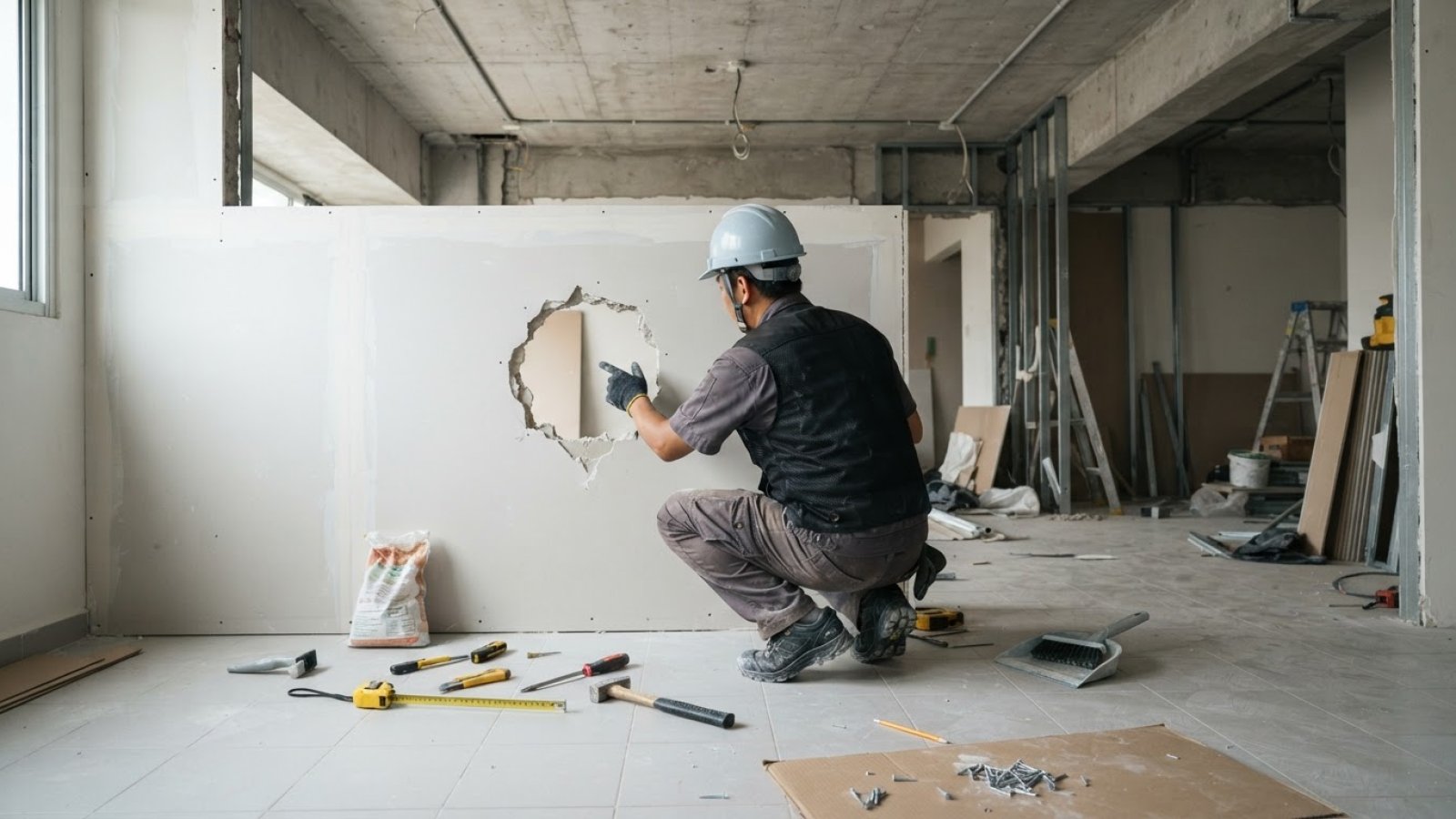
Yes, but only if it's non-load-bearing and non-structural
You can remove a drywall partition yourself. Just make sure it's not load-bearing or part of the building's structure. Any partition separating wet and dry areas, like a bathroom or kitchen wall, or one next to a door or window opening, probably needs a licensed contractor. It might even need permits.
In Singapore, HDB and condo rules often require certain partitions to stay. Even if your partition isn't critical, you might need approval from the MCST or your landlord first. You'll also need to arrange proper clean-up. Not doing so can lead to fines, extra work, or costs down the line. Wall-hacking contractors do this work regularly and can save you time and hassle.
If the wall is free-standing, made only of drywall, and your landlord or MCST has given the okay, you can tackle it yourself. But know your limits. Demolition looks easier than it is, and mistakes can be costly. You're still responsible for rubble disposal and finishing the area properly, not just breaking things.
A drywall partition can hide wiring, pipes, or ductwork. If it does, you'll need to protect them or reroute them. That usually means hiring electricians and fitters. Building codes might also require extra protection, as plasterboard partitions typically offer fire resistance.
If you're serious about a DIY job, you'll need safety gear, tools, materials, and time to work carefully. For a DIY project, consider a plasterboard-only partition in a non-critical spot, far from plumbing or electrical work. If it's permitted, easily accessed, clear of obstructions, and not fixed to the ceiling or floor, you'll have the best chance of a safe, proper job.
How to tell if you can remove a drywall partition
When in doubt, assume you can't. Confirm these points before you start tearing things down:
Check your tenancy or strata title rules. You'll likely need approval from your landlord, the MCST, or the URA. Permits may also be required, especially if the space has specific legal use restrictions, like a kitchen or bedroom.
Inspect the partition closely. You can't remove walls that:
- Separate wet and dry areas (e.g., bathrooms from living rooms).
- Contain electrical, plumbing, or drainage lines.
- Carry air conditioning or ventilation ducts.
- Support other parts of the building or walls, or have timber, steel, or brick reinforcement.
- Are near a door or window opening, or support a door frame or lintel.
- Form part of the building's original design or approved layout. These are called structural partitions and removing them is against the law without permission.
Other partitions are called non-structural. You can remove these. They don't support the building or its services. They include:
- Drywall partitions (made of plasterboard or gypsum).
- Glass partitions.
- Partition wall panels.
If you're unsure, hire a contractor to check. At minimum, get an electrician, plumber, and air-con technician to inspect for hidden lines and ducts. You'll still need the right approvals and permits before starting.
(You might also find that removing or altering partitions isn't enough. If the space doesn't meet legal requirements for its intended use, you may need full demolition and reinstatement. Check the rules for bedroom sizes, kitchen sizes, fire egress, venting, plumbing, drainage, and lighting before you begin.)
What tools and materials you'd need
Doing it yourself means sourcing your own equipment and supplies. We won't name brands, but here's what you'll likely need. Quality gear isn't cheap, but many people struggle with tools that break mid-job. You'll need good equipment to finish properly.
Protective gear:
- A dust mask and eye protection are essential. Consider ear protection and heavy gloves too.
- Disposable overalls and a shower cap or bandana to keep hair clear.
- Plastic sheeting to seal doors and the workspace, plus duct tape to secure it.
Tools and lifting equipment:
- Utility knife with spare blades.
- Trowel, drywall saw, and an occasional knife (the curved kind).
- Plasterboard lift for handling drywall sheets.
- A long, thin tool.
- Drill and driver set with drywall screw bits.
- Circular saw or jigsaw with a drywall blade.
- Reciprocating saw for cutting nails.
- Crowbar, claw hammer, and wrecking bar.
- Hacksaw, stud finder, laser level, and a 24ft tape measure.
- Wheelbarrow, rubbish bags, and a utility trolley.
- Portable vacuum cleaner and a shop vacuum for dust.
- Renting a skip or truck for scrap and debris disposal.
Materials for a proper finish:
- New plasterboard, drywall screws, and joint tape.
- Drywall mud, sandpaper, and spackle.
- Underlayment, flooring, and skirting.
- Wood, nails, and plaster for framing and corner posts.
If the partition contains wiring, plumbing, or ductwork, you'll also need:
- Electrical conduit, wire, insulation, and a junction box.
- Plastic pipe, fittings, and a new drain trap.
- Ductwork and ventilation grilles.
The steps to remove a drywall partition
Once you've done your checks and decided to proceed, it's a multi-stage process. Wear your protective gear. If your home gets dusty during normal cleaning, imagine the dust during demolition.
Use a stud finder to locate all framing behind the drywall. Try to remove as much drywall as possible without disturbing the framing. If you do, you'll need a stronger frame for any new plasterboard, or a plumber and electrician to reroute wiring and pipes.
Next, use a utility knife to cut the drywall along the edges. Use a drywall saw for any seams. Pry the drywall away from the studs with a crowbar. Be careful not to damage framing, wiring, or pipes.
Then, remove the framing. This could be wood or metal studs, or a mix. Use a claw hammer, wrecking bar, or crowbar to remove nails from the studs. If studs are embedded in the floor or ceiling, you might need a reciprocating saw to cut them. Remove insulation or other cavity materials. Use a shop vacuum to clean up debris.
Finally, clear all remaining debris and clean the work area. Patch any holes in the drywall or flooring. Install new wiring, plumbing, or ductwork if needed. You might also need new drywall, insulation, or framing, depending on your plans. If installing new drywall, tape and mud the seams, sand smooth, and paint.
The next steps might involve removing old flooring, skirting, or underlayment, and installing new flooring.
Cost, rules, and risks of doing it yourself
If you're comfortable with DIY, doing it yourself can save money. But consider if it's truly the best option. It might end up costing more overall, depending on what you own, rent, or borrow, how long it takes, and any repairs needed for mistakes. If you're in a hurry, DIY might not be fast enough and will consume a lot of your time.
You'll need to research the process and your building's rules, plus the tools and materials you'll need. You're responsible for disposing of everything removed. The cleanup and patching can be as much work as the demolition itself. It will likely take twice as long as you expect, especially if you're installing new fixtures, wiring, or plumbing. Plan for repairs, as framing, flooring, or ceilings could be damaged. If you find mildew, mould, or asbestos, you'll need specialists. Depending on what you uncover, you might face bigger jobs than anticipated.
Moving items, protecting surrounding areas, and cleaning the workspace will add time and cost. Scraping old paint or removing old fixtures, underlayment, and flooring can add hours. What you find might lead to bigger jobs than expected, or require more reinforcement than the original partition provided.
Permits are needed for anything structural or within specific legal limits. Even if a space was previously a bedroom, if you're altering partitions to create one, you might need full demolition and reinstatement to meet legal size requirements. You're also liable for any damage, injuries, or workmanship issues. If you end up needing an electrician, plumber, or carpenter, you could pay more than hiring a wall-hacking contractor from the start. And if your partition removal isn't approved, and you can't use the space as planned, you might have to pay to restore it.
It's your call. If you have mechanical skills, tools, and confidence, it can be a good learning experience. But if you're unsure, give us a call. We can make it easier and faster for you.
Can I remove a drywall partition in an HDB flat or condo?
Yes, but you must check the rules and get approvals from the HDB, URA, or your MCST. Non-load-bearing, non-structural drywall partitions can usually be removed in HDB flats or condos. However, removing structural partitions or those separating wet and dry spaces is generally not permitted. You'll also need to follow Singapore's regulations for demolition and reinstatement.
Can I remove a drywall partition in a landed home?
Yes, but the same rules apply. Ensure the partition is non-load-bearing and non-structural. Get the right approvals from the URA or relevant authorities. Follow rules for demolition and reinstatement. If the partition is part of the original structure or approved layout, get approval from the URA or authorities before removal. You'll also need necessary permits, like a demolition or building permit.
Do I need a permit to remove a drywall partition?
It depends. For non-load-bearing, non-structural partitions, you might not need a permit. However, if the partition is part of the original structure or approved layout, you'll need approval from the HDB, URA, or relevant authorities. Ensure you have the necessary permits, such as a demolition or building permit, before starting.
How do I know if a drywall partition is load-bearing or structural?
If the wall carries electrical, plumbing, or drainage lines, or air conditioning or ventilation ducts, it's likely load-bearing and cannot be removed. Check its purpose and location. If it separates wet and dry spaces (like a bathroom or kitchen), it may be part of the original structure or approved layout, requiring approval for removal.
Inspect any framing. If the partition is plasterboard or gypsum, and not reinforced with wood or steel studs, it might not be load-bearing. If it's part of the original structure or approved layout, it's most likely load-bearing and can't be removed. If unsure, hire a contractor or professional engineer to assess the wall.
If you're unsure, contact the HDB, URA, your building management office, or hire a professional demolition and reinstatement contractor to assess the wall and determine if it's load-bearing or structural.


