Can You Hack Your Singapore Kitchen Cabinet Walls?
Considering hacking your kitchen cabinet walls? Understand the possibilities and limitations for HDB, condo, and landed properties in Singapore. We explain what you need to know.
Jun Wei
6 min read
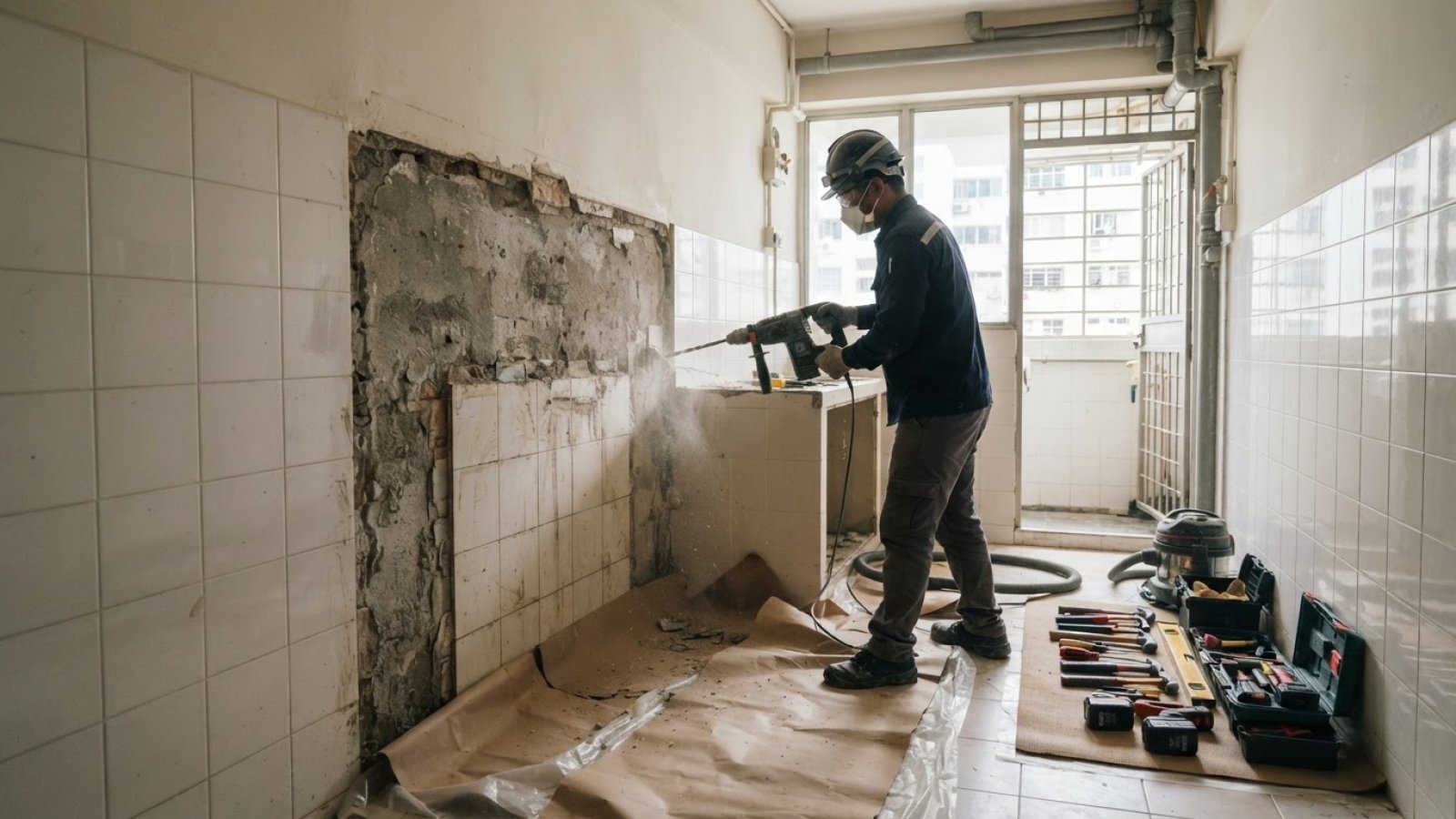
Hacking Kitchen Cabinet Walls in Singapore
Planning a kitchen renovation and wondering about removing the walls where your old cabinets were? It's a common idea, especially if you want a modern look or a different layout. The short answer is: yes, you can usually hack walls that cabinets were fixed to. But it's not just about grabbing a hammer. You need to know what kind of wall you're dealing with. And crucially, whether it's structural.
When we talk about hacking kitchen cabinet walls, we usually mean non-structural partition walls or plasterboard where cabinets were mounted. These are generally okay to remove. Just make sure they don't hide essential services or structural elements.
What Kind of Wall Are Your Cabinets Attached To?
First, figure out how the wall is built. In Singapore, you'll see a few types:
- Brick walls: Common in older HDB flats and some landed homes. Cabinets get screwed right into the brickwork.
- Concrete walls: You'll find these in most condos and newer HDB flats. They're often around structural columns or in bathrooms.
- Lightweight concrete (AAC blocks): Used in some newer buildings.
- Plasterboard or drywall partitions: Often used for non-load bearing walls in offices, sometimes in homes. Cabinets are usually fixed to studs inside these walls.
How we hack, what tools we need, and the risk of hidden services all depend on the wall material. Hacking a brick wall takes more effort than removing plasterboard.
Structural vs. Non-Structural Walls
This is the most important difference. In Singapore, you absolutely cannot hack or remove structural walls. These support the building's stability. Removing them can lead to fines, mandatory reinstatement, and safety risks. So, how do you tell if the wall your cabinets are on is structural?
Generally, exterior walls, walls around the household shelter, and thicker internal walls are likely structural. If you're unsure, always ask a qualified renovation contractor. Or check building plans if you have them. We've seen people wrongly assume a wall was non-structural, only to find it held a main water pipe or was load-bearing.
Walls that just had cabinets screwed into them, especially thinner kitchen brick walls or plasterboard partitions, are usually non-structural. These are the ones you can typically remove.
Are There Pipes or Wires Behind the Wall?
Before you even think about hacking, you must check for hidden pipes or electrical wiring. Kitchens often have services concealed behind cabinets.
This can include:
- Water supply pipes for sinks and dishwashers.
- Drainage pipes.
- Electrical conduits for power outlets, lighting, and ventilation fans.
Accidentally cutting a pipe can cause serious water damage to your unit and neighbours below. Hitting an electrical wire is dangerous. Before any hacking starts, we use specialised equipment like pipe and wire detectors. If you're doing it yourself, consider hiring a professional for this check. Or at least be extremely careful and research common service locations for your building type.
HDB, Condo, and Landed Home Regulations
The rules for renovation, including wall hacking, can vary slightly depending on your property type.
HDB Flats
For HDB flats, the Building and Construction Authority (BCA) and HDB have specific rules. You generally cannot hack structural walls. For non-structural walls where cabinets were fixed, you'll usually need to submit a renovation permit application through your contractor. This ensures the work follows HDB's guidelines. We always advise clients to check the latest HDB renovation rules first.
Condominiums
Condominiums are run by their Management Corporation Strata Titles (MCST). You must follow their by-laws and renovation guidelines. This typically means submitting a renovation proposal for the MCST's approval. They might have specific rules about hacking, noise, and working hours. Some condos are stricter than others about internal alterations.
Landed Homes
Landed homes usually offer more flexibility. However, you still need to consider structural integrity and any effect on neighbours. If your landed home is part of a development with a managing body, you might still need their approval. For standalone landed properties, the main concern is ensuring hacking doesn't compromise the building's structure.
The Process: From Cabinet Removal to Wall Hacking
If you're removing kitchen cabinets to hack the wall behind them, here’s the usual process:
- Cabinet Removal: First, carefully dismantle and remove the cabinets. This might involve unscrewing them from the wall and floor, and disconnecting any integrated lighting or plumbing.
- Inspection: With the cabinets off, you see the wall clearly. This is the time for pipe and wire checks.
- Permit Application (if needed): For HDB flats, your contractor submits the renovation permit. For condos, you submit plans to the MCST.
- Protection: Before hacking, protect surrounding areas like floors, countertops, and appliances with dust sheets.
- Hacking: Using the right tools (a demolition hammer or angle grinder, depending on the wall), carefully hack away the designated wall sections. We focus on controlled demolition to minimise dust and vibration.
- Debris Removal: Dispose of all hacked materials and debris according to local rules. Proper disposal services are essential.
- Reinstatement (if needed): If you only hack part of a wall, or create a new opening needing finishing, you might need plastering or re-tiling.
Common Questions About Hacking Kitchen Cabinet Walls
Can I remove the entire wall where my kitchen cabinets were?
You can remove the wall if it's a non-structural partition and doesn't hide essential services. Always confirm with your contractor and check building rules.
Do I need a permit to hack a kitchen wall in an HDB flat?
Yes, for most hacking jobs in HDB flats, your registered contractor must get a renovation permit from HDB before starting.
What happens if I hack a structural wall by mistake?
Hacking a structural wall is a serious rule breach. You'll likely face heavy fines from HDB or your MCST. You'll also have to pay to reinstate the wall, which is very costly.
How do I know if there are pipes in the kitchen wall?
The best way is to use a pipe and wire detector. If that's not clear, ask your contractor. They have experience spotting potential service locations based on your flat's layout and common plumbing/electrical routes.


