Can You Hack HDB Vinyl Flooring?
Considering to hack HDB vinyl flooring? It's not as straightforward as it might seem. We explain what you need to know before you start.
Jun Wei
5 min read
Can You Hack HDB Vinyl Flooring?
You're looking to remove your HDB vinyl flooring. That's a common step when renovating for a fresh start. The short answer is yes, you generally can hack HDB vinyl flooring. It's not as simple as ripping it up without a second thought, though.
We need to consider what's underneath the vinyl and how it was laid. You'll also need to be aware of general renovation rules in Singapore, especially for an HDB flat.
What's Underneath Your Vinyl Flooring?
This is the most important question. Most HDB flats have a concrete subfloor. If your vinyl was glued directly onto this concrete, removal is usually straightforward. You'll need tools to scrape or pry it off.
Sometimes, vinyl might be laid over existing tiles. This is less common in HDB main areas but can happen if a previous owner overlaid rather than removed old tiles. If so, you'll remove the vinyl, then deal with the tiles underneath. Depending on the tiles' condition, you might need to hack those too.
It's also possible, though rarer, that vinyl is laid over a screed layer. A screed is a thin concrete layer for a smoother surface. Removing vinyl on top of a screed shouldn't damage it, but be careful not to gouge it if it's glued down.
How Was the Vinyl Flooring Installed?
The installation method dictates removal ease. Most vinyl flooring in Singapore homes is either:
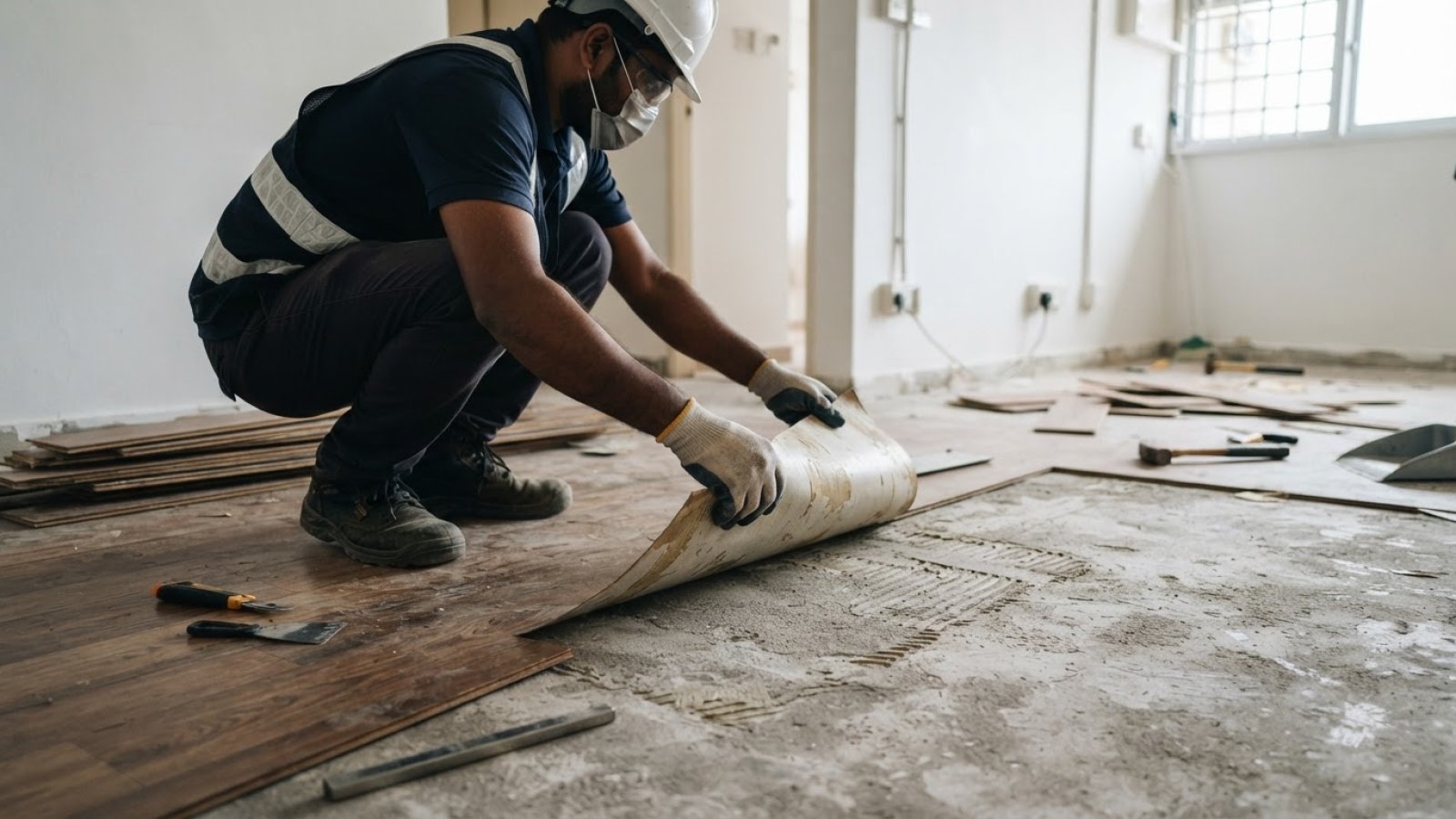
- Glued down: This is common for sheet vinyl and many luxury vinyl tiles (LVT). The adhesive can be strong. You'll likely need a floor scraper, possibly powered, and some effort to get it all up. Then, remove any residual glue from the subfloor.
- Click-and-lock or floating: This type of vinyl plank or tile doesn't use adhesive. It clicks together and floats over the subfloor. Removal is generally much easier. You can often lift it plank by plank.
If it's glued down, expect more work and dust. If it's click-and-lock, it's simpler. Professional removal will still be quicker and cleaner, though.
The Hacking Process: Dust, Noise, and Disposal
When we talk about 'hacking' vinyl flooring, it usually means prying or scraping it off, especially if glued. This creates dust. Even without breaking concrete, the adhesive, underlayment, and vinyl can generate particulate matter.
We protect the rest of your home from dust by covering doorways and vents with plastic sheeting and tape. You'll also need to consider noise. Scraping and prying can be disruptive, though not as loud as hacking concrete walls.
Renovation Hours are crucial. For HDB flats, you can generally only work between 9 am and 5 pm on weekdays. No work is allowed on Saturdays, Sundays, or public holidays. For condos, check with your Management Corporation Strata Title (MCST) for their specific rules, as these can vary.
Disposal is another key factor. You can't just leave old vinyl at the common rubbish chute. You'll need to engage a dismantling and disposal service to haul away the old flooring materials properly. This usually involves renting a rubbish bin or having the contractor take it away directly.
When You Can't Hack HDB Vinyl Flooring
While you can generally remove vinyl, there are a few scenarios where it might be problematic or impossible:
- Over existing protected flooring: If the vinyl was laid over heritage tiles or special flooring you're not allowed to damage, you might have to leave it. This is rare but worth checking.
- Structural concerns: Unlikely with vinyl, but if removal reveals unexpected structural issues with the subfloor, assess that before proceeding.
- Specific MCST or building rules: Some private developments might have specific rules about unit finishes. Always check with your building's management.
The main point is that vinyl itself isn't usually structural or protected. It's the layers beneath and the general renovation regulations that matter.
After Removal: Preparing the Subfloor
Once the old vinyl is removed, you'll be left with the subfloor. If it's concrete, ensure it's clean, dry, and level before installing new flooring. Any remaining adhesive needs scraping or chemical removal. Unevenness might require a self-levelling compound, especially if you're laying new tiles or laminate.
If vinyl was glued over old tiles, and you've removed both, you're faced with the old tiles. Decide whether to hack those up too, or if they can serve as a base for certain new flooring types (though overlaying is often discouraged).
Common Questions About Hacking HDB Vinyl Flooring
Do I need a permit to hack HDB vinyl flooring?
Generally, no specific permit is required from HDB just to remove vinyl flooring. However, all renovation works must adhere to HDB's renovation guidelines, including noise and working hours.
What tools do I need to hack vinyl flooring?
Basic tools include a heavy-duty floor scraper, a utility knife, pliers, and a pry bar. For larger areas or stubborn glue, a powered floor scraper or an oscillating multi-tool can be very helpful.
How much dust does removing vinyl flooring create?
It depends on installation. Glued-down vinyl creates more dust during scraping than click-and-lock types. Proper containment is always recommended.
Can I lay new flooring directly over the old vinyl?
It's generally not recommended, especially for tiles or solid wood. Most manufacturers advise removing old flooring to ensure the new flooring is laid on a clean, stable, and flat subfloor. Some specific laminate or LVT might allow overlaying, but always check manufacturer guidelines.


