HDB Floor Tiling: Can You Remove Old Tiles?
Thinking about HDB floor tiling removal? You can generally hack up old tiles, but there are specific rules and considerations to keep in mind.
Jun Wei
5 min read
HDB Floor Tiling Removal: Can You Hack It?
Thinking about renovating your HDB flat? You're probably wondering about removing old floor tiles. Can you just hack it all up and start fresh? Yes, in most cases, you can remove existing floor tiles in your HDB flat. We get this question a lot when people want a completely new look, maybe switching to vinyl or wood, or just laying down a new tile pattern.
But it's not as simple as swinging a hammer. There are rules and practical things to keep in mind. What's underneath matters for your plans.
What Are You Actually Removing?
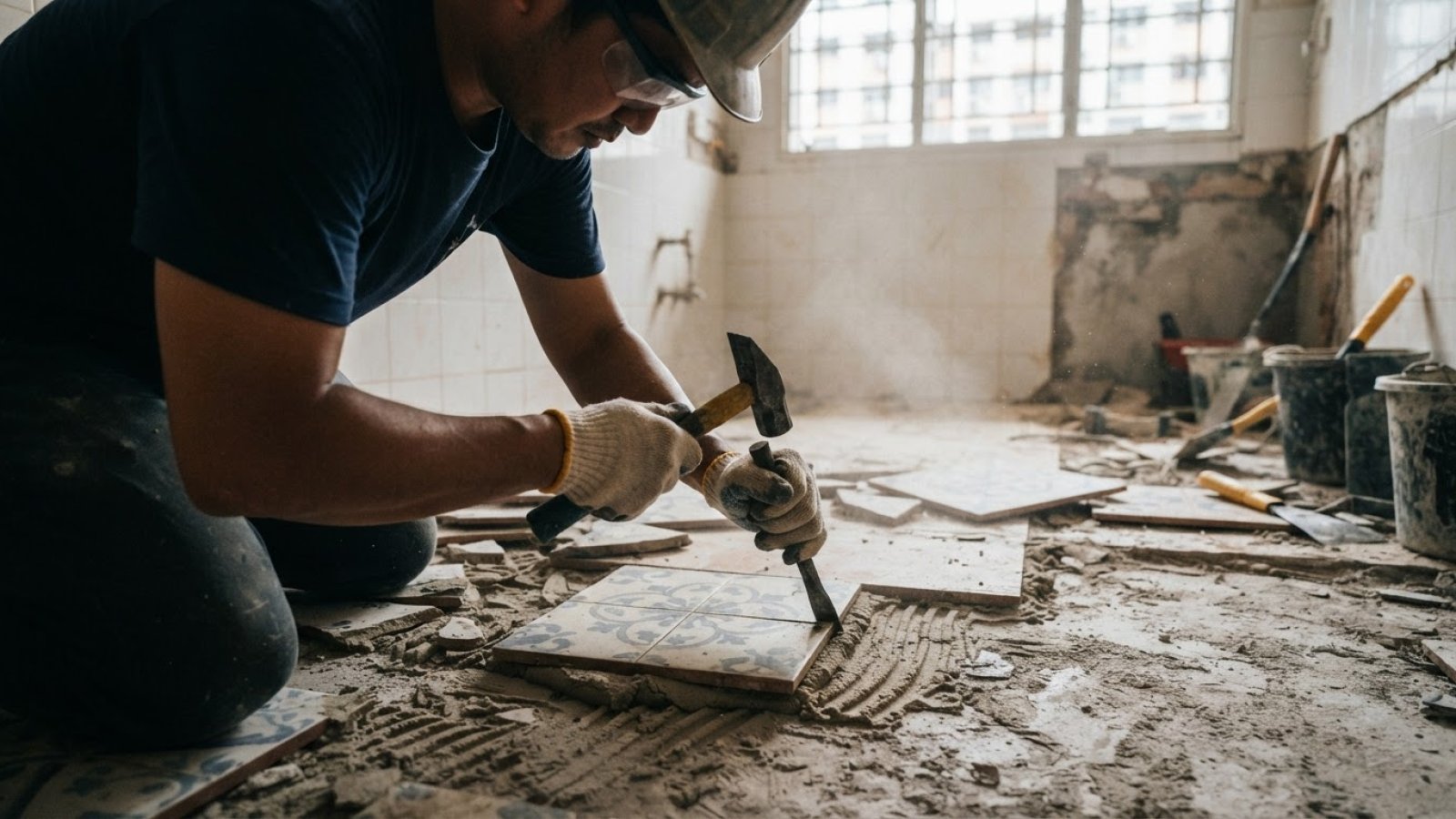
When we talk about hdb floor tiling removal, we mean taking off the old ceramic or homogenous tiles. This usually involves hacking away at the concrete screed or slab. We use tools like demolition hammers, or sometimes just chisels and hammers. It's a dusty, noisy job, no doubt about it.
Remember, the tiles are just the surface. Beneath them is the structural concrete floor. That's your base for whatever new flooring you choose. Unlike some walls, you can't just hack at the concrete slab without proper checks and approvals.
Rules and Regulations for Hacking HDB Floors
HDB has rules for renovation work. These are to keep buildings safe and sound, and to keep neighbours from getting too much noise. For floor hacking, the biggest concern is usually the waterproofing layer. This is especially true in bathrooms and kitchens.
Bathrooms and kitchens have a required waterproofing membrane under the tiles. If you're hacking these areas, you must protect that waterproofing. If it gets damaged, you'll have to replace it. This adds to the cost and complexity. We always tell clients to check the existing waterproofing with HDB or their contractor before starting.
Hacking floor tiles in living areas or bedrooms is usually less restricted. That is, as long as you're only removing tiles and not damaging the concrete slab. Still, always ask your renovation contractor about hidden pipes or electrical wires in the screed.
The Process of HDB Floor Tiling Removal
The actual removal is quite intensive. Here's how it typically goes:
- Preparation: We cover up furniture, doors, and anything else that could get dusty.
- Demolition: Carefully hacking away the tiles. We do this methodically, usually starting at one end.
- Debris Removal: All the broken tiles and muck have to be cleared. Proper disposal is key, and HDB has rules for this. You can't just dump it anywhere.
- Surface Prep: After the tiles are gone, we clean the concrete surface. Sometimes we level it too, getting it ready for the new flooring.
How long it takes depends on the area size and tile type. For a standard HDB kitchen or bathroom, hacking and clearing debris alone could take a day or two.
When Not to Hack: Alternatives and Considerations
Hacking is common, but it's not always the best or only option. Think about these points:
- Subfloor Condition: If the concrete subfloor is damaged or uneven, hacking might uncover more issues that need fixing.
- Cost: Hacking means labour, tools, disposal, and maybe waterproofing repair. It can cost more than just overlaying.
- Overlaying: Sometimes, if existing tiles are fine and you want to save money and hassle, you can overlay. This means putting new flooring right on top of the old tiles. Vinyl or some tiles work this way. But you need to make sure the base is sound and level.
- Noise and Dust: Hacking is naturally noisy and dusty. If you have close neighbours, you must follow HDB's renovation hours strictly.
The choice to hack or overlay often comes down to your budget, the look you want, and your current floor's condition.
Checking for Pipes and Wires
Before any hacking starts, it's vital to know what's under the surface. Tiles usually sit on screed, but electrical conduits or plumbing pipes might be embedded in the screed itself. This is especially common in kitchens and bathrooms. We use equipment like pipe detectors to scan the area and find hazards before we begin.
Hitting a pipe can cause serious water damage. Not just in your unit, but possibly to the floors below. Damaging an electrical wire is also dangerous. It’s always best to let a professional check. If you're unsure, play it safe and consult your renovation contractor.
Frequently Asked Questions About HDB Floor Tiling Removal
Do I need a permit for floor hacking in HDB?
Generally, HDB doesn't require a specific permit just for hacking floor tiles. This is true as long as you're not altering the structural slab or damaging common property. You must follow HDB's renovation rules, including allowed hours.
Can I hack up tiles in my HDB bathroom?
Yes, you can hack tiles in your HDB bathroom. The main thing is the waterproofing membrane underneath. If this is damaged, it must be redone properly to stop leaks.
What happens if I damage the waterproofing during hacking?
If the waterproofing gets damaged, you'll need a contractor to fix or replace it. This is required to prevent water seepage. It will add to your renovation costs and timeline.
Is it cheaper to hack tiles or overlay them?
Hacking usually means more labour and disposal costs, but you get a clean start. Overlaying can be cheaper and less disruptive if done right. However, it might limit your new flooring options and won't fix underlying floor issues.


