Can You Hack HDB Floor Tiles? Rules & What To Expect
Considering HDB floor tile hacking? We explain the rules and what you can expect when removing old tiles from your HDB flat floor.
Jun Wei
6 min read
HDB Floor Tile Hacking: Can You Remove Old Tiles?
You're looking to renovate your HDB flat and want to remove the existing floor tiles. That's a common step. Generally, you can remove HDB floor tiles. But there are important things to know. It's not a free-for-all, and understanding these points upfront will save you trouble. We've seen many projects where homeowners didn't know the full picture.
The core question is usually about whether specific tiles can be removed or if there are hidden issues underneath. We'll cover what you can generally expect and the factors that influence the process.
Understanding HDB Floor Tile Removal
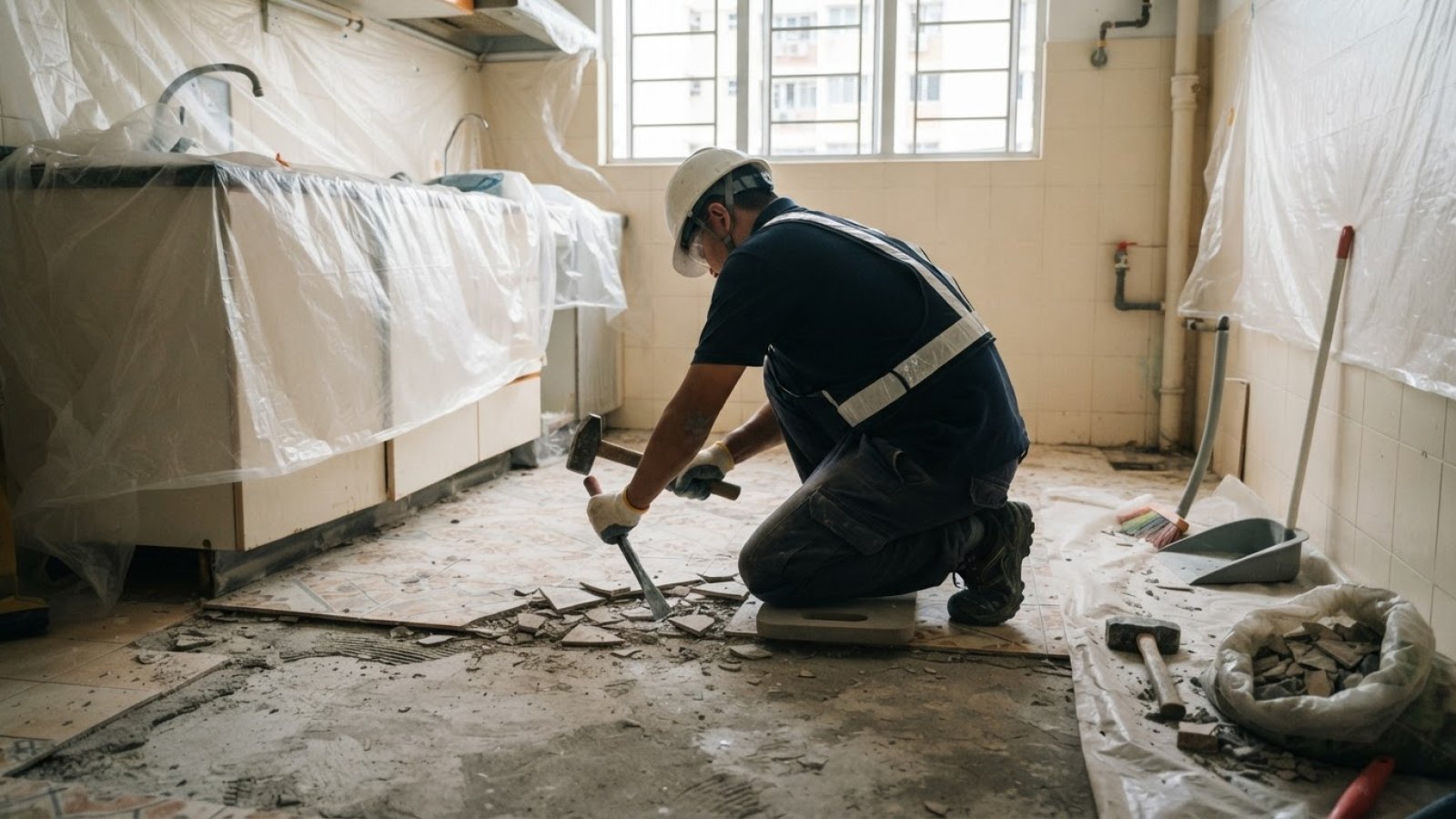
When we talk about HDB floor tile hacking, we mean breaking up and removing existing tiles from your floor. This is often done to install new flooring, like different tiles, vinyl, or timber. Or perhaps to fix damaged or uneven existing tiles. Sometimes it's to change the floor level or layout.
Most of the time, the floor slab beneath the tiles is concrete. The tiles are usually attached using cement mortar or tile adhesive. Removing them involves breaking this bond.
What You Can Typically Hack
In general, you're allowed to hack standard floor tiles in most areas of your HDB flat. This includes the living room, dining room, bedrooms, kitchen, and service yard.
The key is that you're dealing with the tiles and the adhesive or mortar layer. You aren't supposed to damage the structural concrete slab itself. Nor should you interfere with any services embedded within the screed.
Areas and Restrictions to Consider
While tile removal is usually permitted, there are specific areas and circumstances where you need to be extra cautious.
Household Shelter
The walls of the household shelter are strictly off-limits for hacking. While the floor itself might have tiles, hacking into the household shelter floor is generally not allowed because it compromises its structural integrity and function as a bomb shelter. You'll need to check the specific HDB guidelines if you're unsure about the shelter's floor area.
Balcony
Balconies often have different tiling requirements and waterproofing considerations. While you can usually hack the tiles, ensure you don't damage the waterproofing membrane underneath. Proper reinstatement of the waterproofing is crucial if you're planning to re-tile or change the flooring here. Damaging it can lead to serious water leakage issues later.
Waterproofing Membranes
In areas like bathrooms and kitchens, there's a waterproofing membrane installed below the tiles. If your renovation involves removing tiles in these wet areas, it's critical to avoid damaging this membrane. If it is damaged, you'll need to reinstate it. Sometimes, older waterproofing might be integrated with the screed, making careful hacking even more important.
What Lies Beneath the Tiles?
This is where things can get unpredictable. Before you start hacking, be aware of potential discoveries.
- Pipes: Water supply pipes, drainage pipes, or conduit pipes for electrical wiring might be laid within the screed or directly beneath the tiles. Accidental damage can cause leaks or electrical hazards, leading to costly repairs and potential disputes with neighbours or HDB. Always check with your contractor about thorough checks before any hacking begins.
- Uneven Screed: The concrete layer beneath the tiles, known as screed, might not be perfectly level. You might encounter low spots or high spots that will need to be addressed before laying new flooring.
- Old Adhesives: In some older flats, you might find very stubborn tile adhesives that are difficult to remove completely, requiring more effort and specialised tools.
The Hacking Process: What to Expect
The actual process of HDB floor tile hacking involves preparation, demolition, removal, levelling or repair, and cleaning. Preparation means covering furniture, adjacent walls, and fixtures with protective sheeting to minimise dust and damage. Demolition uses tools like demolition hammers, angle grinders, and manual chisels to break up the tiles and adhesive or mortar. This is a noisy and dusty process. Then, debris is cleared away. If necessary, the screed will be repaired or levelled to prepare for the new flooring. Finally, the area is thoroughly cleaned.
The duration and cost depend heavily on the area size, the type of tiles, the adhesive used, and the condition of the underlying screed. Large format tiles or very old, hardened adhesive can make the job take longer.
Noise and Dust Control
Hacking is inherently noisy and dusty. HDB has specific rules regarding renovation hours to minimise disturbance to neighbours. Generally, renovation work, including hacking, is allowed from 9 am to 5 pm on weekdays. You must avoid noisy work on Sundays and Public Holidays. It's always a good idea to inform your neighbours beforehand about the renovation schedule, especially the hacking phase.
Dust control is also critical. Professional renovation contractors will use dust sheets, seal off doorways, and sometimes employ dust suppression systems. However, some dust is unavoidable.
Do You Need a Permit for Hacking Floor Tiles?
For standard HDB floor tile hacking within your flat, you generally don't need a specific permit from HDB. The work is considered internal renovation. However, if your renovation involves any structural hacking, alterations to common property, or works requiring a professional engineer's approval, then permits might be necessary. It's always best to consult with your renovation contractor, who will be familiar with HDB's latest regulations. You can also check the HDB renovation guidelines directly.
Hacking Floor Tiles in Condominiums and Landed Properties
The principles for hacking floor tiles in condominiums and landed properties are largely similar to HDB flats regarding the actual removal process. However, the management (MCST for condos) or specific building rules might impose additional restrictions, especially concerning noise levels, working hours, and disposal of debris. Always check with your Building Services Department or Management Office before starting work.
Common Questions About HDB Floor Tile Hacking
Can I hack tiles in my HDB kitchen?
Yes, you can usually hack tiles in your HDB kitchen. Just be mindful of any pipes or electrical conduits that might be embedded in the screed. Proper planning with your contractor is essential.
What about waterproofing in my bathroom?
If you're hacking bathroom tiles, it's crucial not to damage the existing waterproofing membrane. If it is damaged, it needs to be professionally reinstated before new tiles are laid to prevent future leaks.
How much dust is created when hacking tiles?
Hacking tiles creates a significant amount of dust. Professional contractors use dust sheets and other measures to contain it, but some dust dispersal is inevitable. Ensure the area is well-ventilated during and after the work.
Do I need to reinstate the floor tiles when I move out?
This depends entirely on your tenancy agreement or the terms of your lease. If you've hacked the original tiles, you may be required to reinstate them or provide a new flooring of similar standard at the end of your lease. Check your contract carefully.


