HDB False Ceiling Hacking: Rules & What to Expect
Considering HDB false ceiling hacking for your renovation? We explain the rules, what you can safely remove, and what to expect during the process.
Jun Wei
5 min read
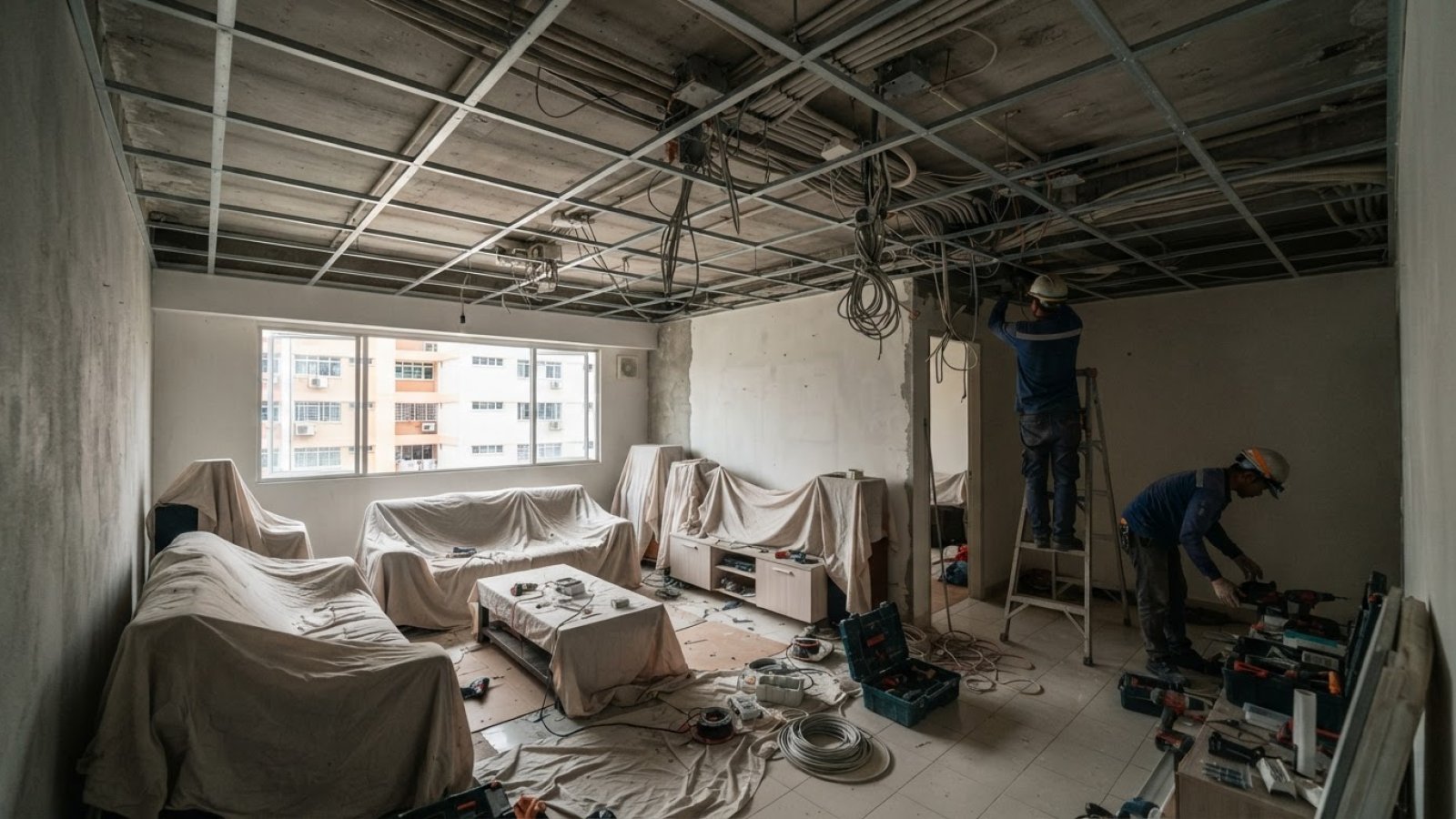
HDB False Ceiling Hacking: What You Need to Know
Planning a renovation for your HDB flat and considering hdb false ceiling hacking? It's a common job, but there are specific things you need to know before you start. False ceilings are fitted in many HDB homes for looks or to hide pipes and wiring. Hacking them out might sound simple, but it’s not always as easy as just taking down some boards.
You'll need to understand the rules, what's usually hidden above, and how the work itself is done. We often see homeowners wanting to remove their existing false ceiling, usually to get more headroom or to install different lighting.
What's Usually Above an HDB False Ceiling?
A false ceiling creates a gap between your actual concrete slab and the panels. Inside this void, you'll typically find:
- Electrical wiring and conduits for lights, fans, and air-con.
- Piping, which could be for plumbing or air-con condensation.
- Ventilation ducts for exhaust fans.
- The original concrete slab ceiling.
It’s crucial to remember that the concrete slab is structural. Any work on the false ceiling must be done carefully, especially around any electrical or plumbing services in the void.
Can You Hack Any False Ceiling in an HDB?
Generally, yes, you can remove most types of HDB false ceilings. They're usually made from plasterboard, gypsum board, or mineral fibre tiles, held up by a metal or timber frame attached to the concrete slab.
Still, be very careful. The void above could hide essential services. Damaging electrical cables or water pipes during hacking could cause short circuits, leaks, or expensive repairs to building systems. We always suggest a professional check before any hacking begins.
HDB False Ceiling Hacking: What to Expect
Removing a false ceiling involves taking down the panels and the supporting frame. Here’s a general idea of the process:
- Preparation: The area below is covered with sheeting to catch dust and debris.
- Dismantling Panels: The suspended ceiling panels are removed carefully.
- Removing Framework: The metal or timber frame is then taken down, usually by unscrewing it from the concrete slab.
- Electrical and Plumbing Considerations: Lights or other services in the false ceiling must be disconnected by a qualified electrician first.
- Debris Removal: All removed materials are bagged and disposed of properly.
The time needed depends on the area size and how complex the false ceiling is. For a typical living room or bedroom, it might take half a day to a full day. We work to manage the dust, which can be quite significant.
Potential Issues and How We Handle Them
During hdb false ceiling hacking, a few common issues can pop up:
- Hidden Services Damage: Accidentally cutting wires or pipes is a risk. Our team is trained to work around these safely. If we find live electrical points or active water lines, we'll stop work in that area and advise on the best way forward, which often means disconnecting the service first.
- Dust and Mess: Hacking creates a lot of dust. We use dust sheets extensively and sometimes dust suppression methods. Still, some dust is unavoidable, so it’s best to have minimal items in the room if possible.
- Uneven Concrete Slab: Sometimes, the original concrete slab might not be perfectly smooth after the false ceiling is gone. Minor imperfections can usually be fixed during plastering or painting.
- Disposal: All hacking debris must be disposed of correctly per HDB rules. We handle the dismantling and disposal for you.
If you want more height or to install a different lighting system, removing the false ceiling is a practical step. But make sure it’s done by professionals who understand the potential risks.
When Do You Need to Hack a False Ceiling?
Homeowners often choose to hack a false ceiling in a few common situations:
- To Increase Ceiling Height: This is the most common reason. Removing a false ceiling can make a room feel much more spacious, especially in flats with lower original ceilings.
- To Install New Lighting: If you want different lighting, like recessed spotlights, and the current false ceiling doesn't work, removal might be needed.
- To Fix Leaks or Wiring Issues: If there’s a leak from the floor above, or a problem with wiring hidden in the false ceiling, you’ll need to hack it open to fix it.
- For a Different Aesthetic: Some people like the look of exposed concrete ceilings, or want a completely flat surface.
Whatever your reason, getting the job done right the first time avoids future problems.
Frequently Asked Questions
Do I need a permit for false ceiling hacking?
Usually, you don't need a specific HDB permit to remove a standard false ceiling. However, if the hacking involves structural elements or significant electrical/plumbing work, permits might be necessary. It's always best to check with HDB if you're unsure about your project's scope.
How long does HDB false ceiling hacking take?
The time can vary, but for a typical living room or bedroom, it might take from half a day to a full day. Room size, the complexity of the installation, and any hidden services can affect how long it takes.
Is hacking a false ceiling very dusty?
Yes, hacking and removing a false ceiling can create a lot of dust and debris. Professionals use protective measures like dust sheets and sometimes dust suppression equipment, but some dust is expected.
Can I remove the whole false ceiling myself?
While it might be possible for very simple installations, we don't recommend doing DIY false ceiling hacking. There's a risk of damaging hidden electrical wiring, plumbing, or even the concrete structure if you lack experience. Professional removal ensures safety and proper disposal of debris.


