HDB Bathroom Demolition: What You Can and Can't Hack
Planning HDB bathroom demolition? Learn what you can and can't hack, from tiles and fixtures to structural walls, to avoid costly mistakes.
Jun Wei
7 min read
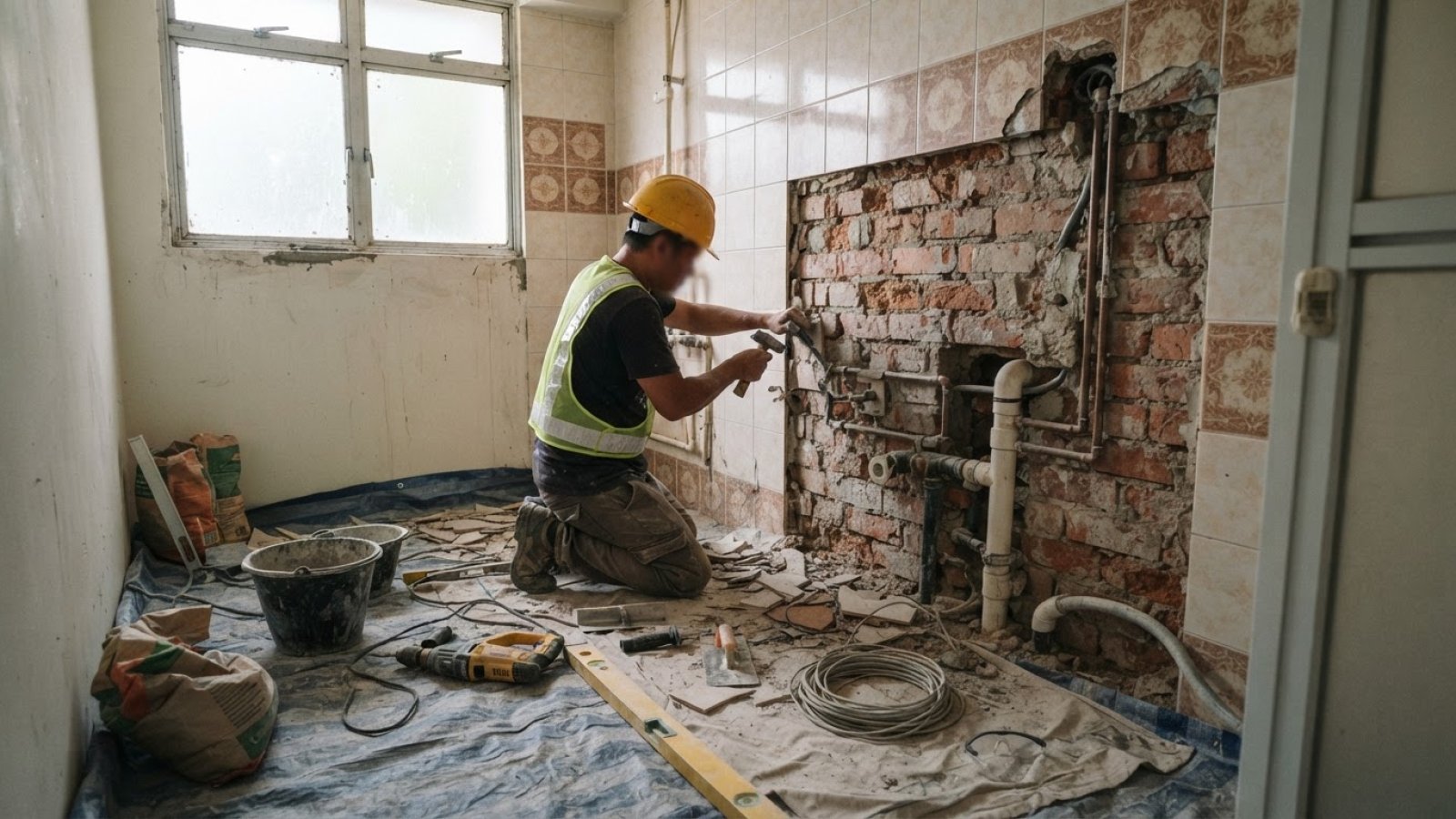
HDB Bathroom Demolition: What You Can and Can't Hack
Planning an HDB bathroom demolition? You need to know what you can remove before starting. We can generally hack out most finishes and non-structural elements. That includes wall and floor tiles, sanitary fittings like your toilet and sink, vanity cabinets, and mirrors. We help homeowners remove these all the time to prep for a complete bathroom overhaul.
But some things are strictly off-limits. Structural walls that enclose the bathroom? You can't touch them. Neither can you touch the household shelter, a reinforced concrete structure for civil defence. Messing with these brings serious penalties and safety risks.
What Parts of Your HDB Bathroom Can You Demolish?
When we talk about demolition in an HDB bathroom, we mean removing existing finishes and fixtures to make way for new ones. It's standard for most bathroom renovations. Here’s what’s usually allowed:
- Wall and Floor Tiles: Hack off existing tiles from walls and floors. This is often needed if you're changing the look or if the old ones are damaged. Floor hacking is a common request.
- Sanitary Fittings: The toilet bowl, sink, bidet spray, and existing showerheads or mixers can all be removed.
- Vanity Cabinets and Mirrors: Freestanding or wall-mounted cabinets and mirrors can be dismantled and taken out.
- Plumbing and Electrical Points: Relocating or removing certain plumbing pipes and electrical points is usually permitted. This needs careful planning and execution by a licensed professional to avoid damaging core services.
- Waterproofing Layer: The old waterproofing membrane can be removed. A new one will be applied as part of the renovation. This is critical for bathroom waterproofing.
- Doors: If you're changing the door or frame, these can be removed.
For any of these works, especially plumbing or electricals, use professionals. We make sure the demolition is done safely and correctly.
What You Cannot Demolish in an HDB Bathroom
Rules about what you can't demolish are very strict. They ensure the building's structural integrity and safety. You must understand these limits to avoid fines or having to reinstate wrongly done work.
The main off-limits items include:
- Structural Walls: These are the building's main load-bearing walls. Hacking into them can compromise the entire structure of your flat and those above or below. Even if a wall seems non-structural, confirm with a professional or check building plans.
- Household Shelter: The reinforced concrete household shelter in HDB flats cannot be altered. No hacking, drilling, or removing any part of its walls or door. It's for civil defence. Any modification is a serious offence.
- Water Tank: Some older HDB flats might have a water tank. These are usually built-in and not meant for removal. Check HDB guidelines if you have one.
- Main Plumbing Risers and Ducts: The main pipes carrying water or waste for the block, and the service ducts housing them, are essential building infrastructure. They cannot be tampered with.
Always err on the side of caution. If you're unsure about a wall or fixture, it's best to consult with us or HDB directly.
HDB Bathroom Demolition Permits and Regulations
For most standard HDB bathroom demolition work removing tiles, sanitary fittings, and non-structural elements, you typically don't need a specific HDB permit. This work doesn't affect the building's structure or common areas.
However, you must follow these crucial regulations:
- Contractor Requirements: Any demolition work, especially hacking walls or floors, must be done by a contractor registered with the Building and Construction Authority (BCA) as an H1 or H2 builder. This ensures safe, professional work.
- Noise and Work Hours: Comply with HDB's renovation hours. Generally, renovation work, including hacking, is allowed from 9 am to 5 pm on weekdays. No work is permitted on Sundays and public holidays. Check the latest HDB rules for exact timings, as they can change.
- Disposal of Debris: Proper disposal of demolition debris is mandatory. Contractors must remove and dispose of waste according to NEA guidelines. This usually means using designated rubbish chutes or arranging bulk waste removal. Renovation debris disposal is key.
- Waterproofing: After hacking and before tiling, new waterproofing must be applied to wet areas like bathrooms and the service yard. This is a mandatory HDB requirement to prevent water seepage.
If your demolition involves structural changes or work in common areas, you'll need approval from HDB and possibly other authorities. But for typical bathroom overhauls, sticking to the rules for hacking finishes and fixtures is what matters.
Common Issues and How to Avoid Them During Bathroom Demolition
Demolition work is straightforward in principle, but unforeseen issues can arise if it's not managed properly. Knowing these potential problems can save you stress and money.
1. Damaging Hidden Pipes or Wires: A common risk is hitting concealed plumbing pipes or electrical wiring within walls or under the floor. This can cause leaks, short circuits, or fires. Before any hacking, locate any pipes and wires. While we often identify these through experience, a professional survey might be needed. Always tell your contractor the location of water points and electrical sockets.
2. Inadequate Waterproofing: After hacking old tiles, the existing waterproofing might be damaged or inadequate. Failing to apply new, proper waterproofing before installing new tiles leads to leaks into the unit below. Ensure your contractor uses quality materials and applies waterproofing correctly, allowing enough curing time.
3. Mess and Dust Control: Demolition creates a lot of dust and debris. If not managed well, dust spreads throughout your home and common areas. Your contractor should use dust control measures, like sealing off the work area with plastic sheeting and using dust extraction equipment where possible.
4. Incorrect Demolition of Walls: As mentioned, hacking structural walls or the household shelter is a major offence. Always confirm a wall's type before demolition. Internal partition walls are generally fine, but external walls or those shared with neighbours need careful checks.
5. Noise Disturbances: Hacking is noisy. Be considerate of neighbours by strictly following HDB's renovation hours. Inform them in advance about the schedule, especially the noisy hacking periods.
Working with an experienced contractor and understanding these potential pitfalls helps your HDB bathroom demolition proceed smoothly.
Costs Associated with HDB Bathroom Demolition
The cost of HDB bathroom demolition varies with the scope and items removed. It's not just hacking; it includes labour, disposal, and preparation for the next renovation stage.
Factors influencing cost include:
- Scope of Demolition: Just removing tiles? Or also the toilet bowl, vanity, and maybe some non-structural partition walls? More items mean higher labour cost.
- Area Size: Larger bathrooms take longer to hack and clear, increasing labour charges.
- Type of Tiles: Some tiles are harder to remove, like very thick ones or those laid with strong adhesives.
- Disposal Fees: Factor in the cost of debris disposal. This is usually per trip or per volume.
- Waterproofing: While not strictly demolition, applying new waterproofing is a necessary step after hacking. Budget for it.
- Contractor's Rates: Different contractors have different pricing.
Get detailed quotations from several contractors. Ensure the quote clearly states what's included, especially debris removal and disposal. You can find more on specific costs for bathroom and toilet hacking services.
Frequently Asked Questions About HDB Bathroom Demolition
Can I remove my HDB bathroom tiles?
Yes, you can remove both wall and floor tiles in your HDB bathroom. This is standard for renovations to allow for new tiling or layout changes. Ensure proper waste disposal.
Do I need a permit for HDB bathroom demolition?
For standard demolition of tiles, sanitary fittings, and non-structural elements, you generally don't need a specific HDB permit. However, the work must be done by a BCA-registered contractor, and you must follow HDB renovation hours.
Can I hack down the bathroom wall in my HDB flat?
You can hack non-structural partition walls within your bathroom. However, you absolutely cannot hack structural walls supporting the building or the household shelter walls. Always confirm wall types before demolition.
What happens if I damage a pipe during HDB bathroom demolition?
If you damage a pipe, immediately shut off the main water supply to your flat if possible. Contact your contractor and HDB for assistance. Such damage can cause significant water leakage and structural issues, leading to hefty fines and repair costs.


