Hacking or Full Demolition: Which Does Your Project Need?
The two terms get used interchangeably and mean different things. The distinction affects approvals, method, programme and what the site looks like afterwards.
Tom Lee
2 min read
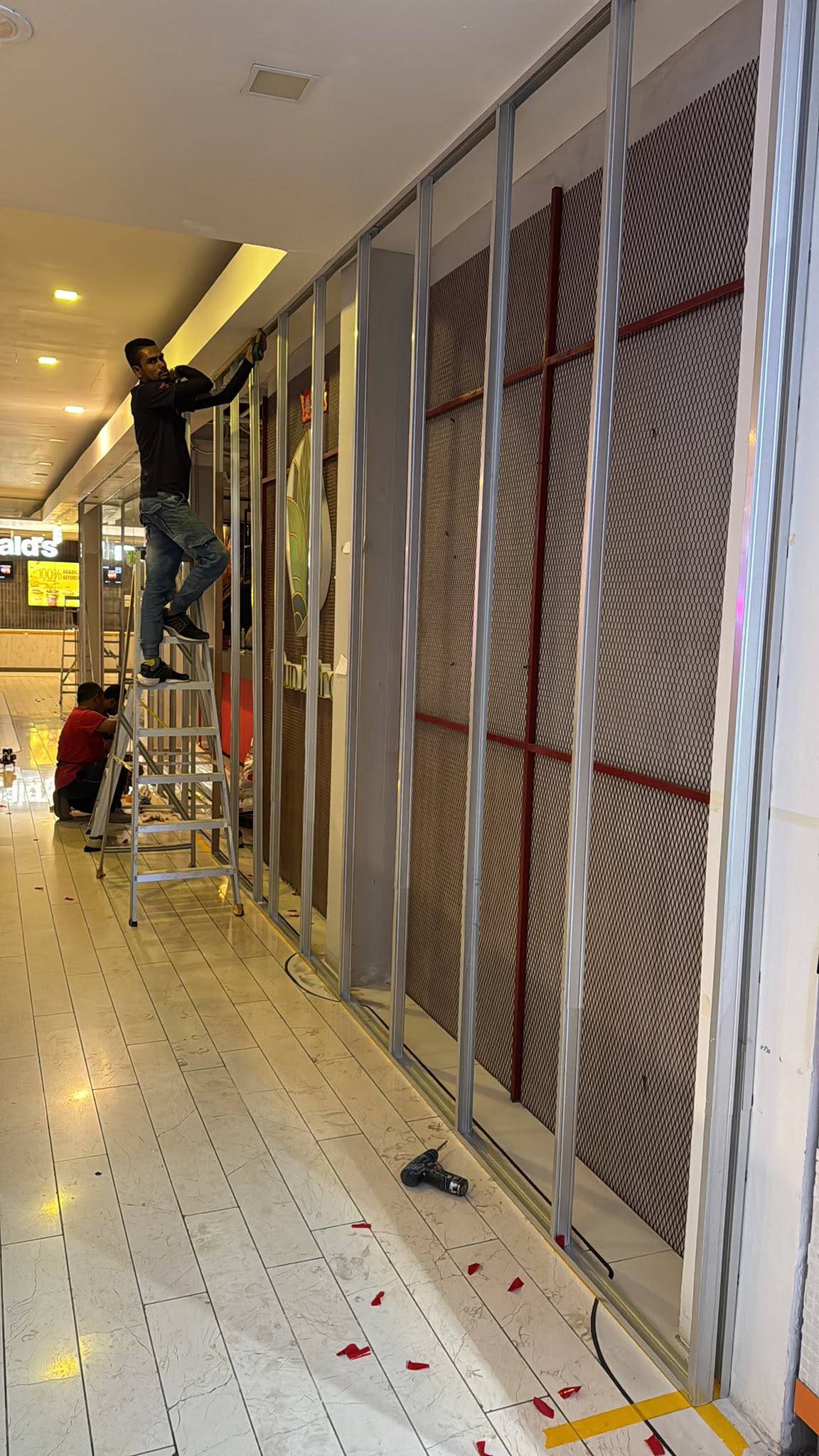
People use hacking, strip-out and demolition as though they mean the same thing. They do not, and the difference determines what approvals you need and how the work is carried out.
Hacking
Hacking is the controlled removal of specific elements within a building that remains standing. Removing a partition wall, taking up floor tiles, forming an opening, stripping wall finishes.
The building stays. Structure stays. What comes out is selected, and everything around it is protected.
In an HDB flat this needs a renovation permit, submitted by a registered contractor, and is subject to permitted hours and the three-day limit on demolition and finish removal.
Strip-out
Strip-out is hacking applied at the scale of a whole unit, usually a commercial one. Everything a tenant installed comes out, leaving the landlord's base build.
The principle is the same as hacking: selective removal with the structure retained. The difference is scope. A strip-out removes partitions, ceilings, floor finishes, joinery, tenant services and signage in a coordinated sequence, usually against a lease deadline.
Demolition
Demolition is the removal of a structure, or a substantial structural part of one. It involves engineering assessment, a different regulatory regime, and heavy plant rather than hand tools.
This is not what happens inside an occupied HDB block or a tenanted office. Almost every enquiry that uses the word "demolition" is describing hacking or strip-out.
Why the distinction matters in practice
Approvals differ
Hacking in an HDB flat needs a renovation permit. Structural alteration is a different matter entirely and is generally not permitted in a flat at all. Confusing the two leads to applications for things that were never going to be approved.
Method differs
Hacking is about protecting what stays. Screening, floor protection, service isolation and careful sequencing are most of the work. Demolition has no equivalent concern because nothing is being retained.
Waste differs
Hacking and strip-out produce sorted waste streams that leave through a lift lobby at permitted times. Demolition produces bulk material handled mechanically.
Programme differs
Hacking is constrained by permitted hours, the three-day limit, and building access windows. These constraints have far more effect on the duration than the physical work does.
Which does your project need?
If the building is staying and you are changing what is inside it, you need hacking or strip-out. That covers essentially all residential renovation and all commercial reinstatement.
If a structure is coming down, that is demolition, and it is a different type of contractor with a different regulatory position.
Why it is worth using the right word
Describing a partition removal as demolition invites quotations for the wrong scope, and can lead to a method that treats the surrounding flat as expendable. The distinction is about how carefully the work is done and what survives it.
Tom Lee
Reinstatement Lead
Tom runs reinstatement works for commercial and office units, focusing on lease handover condition. He advises tenants on what landlords typically require before the final inspection.


