Hacking Out a Kitchen in Singapore: What You Need to Know
Considering hacking out your kitchen in Singapore? We explain what's possible, the regulations you must follow, and the potential pitfalls.
Jun Wei
6 min read
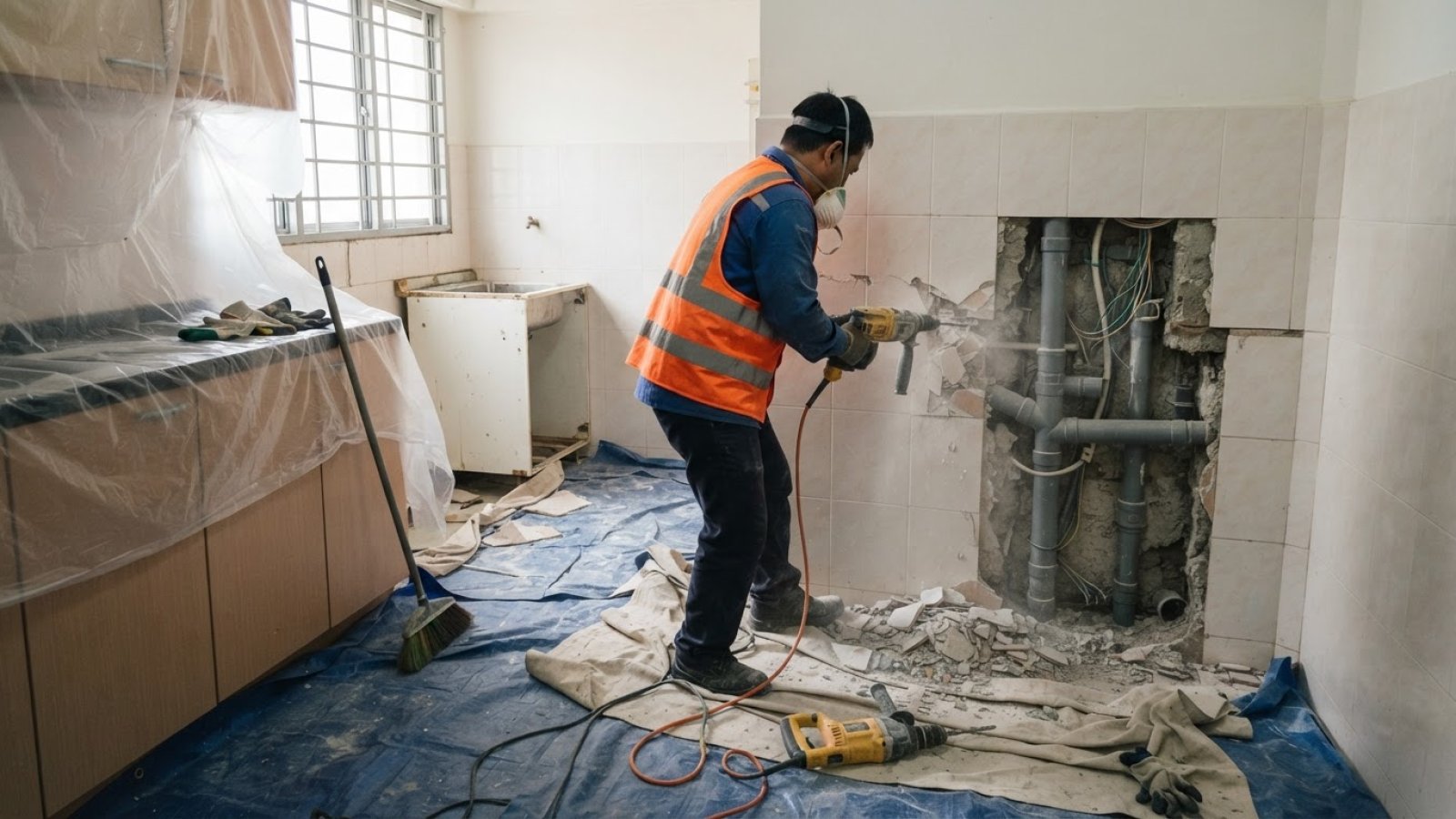
Hacking Out a Kitchen in Singapore: What You Need to Know
Thinking about hacking out your kitchen in Singapore? It's a common desire for homeowners wanting a more open-plan living space or just to update an old layout. But before you grab a sledgehammer, there are important things you need to understand.
We'll cover the key considerations, from structural integrity to regulatory requirements, to help you plan your kitchen renovation effectively.
What Walls Can You Actually Hack Out?
The most crucial question when hacking out a kitchen is identifying which walls can be removed. Not all walls are created equal, and attempting to demolish a load-bearing wall can have serious structural consequences for your entire building. Generally, non-structural partition walls are the ones you can target.
In kitchens, this often includes brick or concrete walls that are clearly not supporting anything above them, or drywall and plasterboard partitions that were added later. Cabinet backing or false walls that aren't integral to the building's structure can also usually go.
You absolutely cannot touch:
- Structural walls: These are the main support systems of the building. Hacking them is strictly forbidden and dangerous.
- Household shelters: These bomb-shelter walls are made of reinforced concrete and are protected by law. Tampering with them is a serious offence.
- Walls containing essential building services: These might house plumbing, electrical conduits, or ventilation shafts that serve other units or the building as a whole.
The best way to be sure is to consult with a qualified contractor. They can assess your specific unit and advise on what's permissible. They'll know how to spot these critical elements and avoid costly mistakes.
Understanding HDB and Condo Renovation Rules
Renovation rules differ depending on whether you live in an HDB flat or a condominium. For HDB flats, the Housing & Development Board has clear guidelines on what renovations are allowed and what isn't. Hacking structural walls is a definite no-go, and specific permits might be needed for extensive works.
Condominiums often have their own management corporations (MCST) with additional rules. These can cover permitted working hours, materials, and the aesthetic of common areas. You'll need to check your MCST's by-laws and get their approval, which might involve submitting renovation plans.
Landed properties generally offer more flexibility, but you still need to be mindful of structural integrity and any potential impact on neighbours or common drains.
For any renovation involving hacking, you'll typically need to submit a renovation proposal to your respective authority (HDB or MCST) for approval before work begins. This often includes detailed drawings showing exactly what you intend to do.
Permits and Approvals You Might Need
Depending on the scope of your kitchen hacking project, you might require permits from the relevant authorities. For HDB, if you're planning to hack any walls, you'll need to submit a renovation application through their online portal. Approval is needed before work can commence.
If your renovation involves significant demolition, a **demolition work permit** might be required. This is usually handled by your renovation contractor. They'll need to ensure the contractor carrying out the work is registered with the relevant authorities.
It's always best to clarify this with your renovation contractor. A good contractor will be familiar with the permit application process and will handle it for you, ensuring all regulations are met.
What About Plumbing and Electricals When Hacking?
When you're hacking out a kitchen, you're almost certain to encounter plumbing and electrical wiring. It's essential to know where these are located before you start any demolition. Hacking into a water pipe can cause flooding and extensive damage, not just to your unit but potentially to neighbours below.
Similarly, hitting an electrical cable can lead to shocks, fires, or power outages. Your renovation contractor should be skilled at identifying the location of these services. They'll often use tools like pipe and cable detectors. If you're unsure, it's wise to get a professional survey done.
Any relocation or modification of existing plumbing or electrical points will require professional work by licensed plumbers and electricians. This is not a DIY aspect of kitchen hacking.
Disposal of Debris
Demolishing parts of your kitchen will generate a significant amount of debris. In Singapore, there are strict rules about how this waste must be disposed of. You can't simply chuck it into the common rubbish chutes or bins.
Typically, renovation contractors will arrange for the collection and disposal of debris. This usually involves using a dedicated rubbish bin for the site and arranging for regular collection by a licensed waste disposal service. The cost of this disposal is usually factored into your renovation quote.
Make sure you discuss debris management with your contractor upfront to avoid any surprises or penalties.
Common Questions About Hacking Out a Kitchen
How long does it take to hack out a kitchen?
The duration depends on the extent of the hacking. Removing a few non-structural tiles might take a day. Hacking down a brick wall could take two to three days. Relocating plumbing and electrical points will add more time.
Can I hack my kitchen wall to combine it with the living room?
This is a popular request. It's often possible if the wall isn't structural. You'll need to confirm this with your contractor and get approval from HDB or your MCST before proceeding.
What's the cost of hacking out a kitchen wall?
The cost varies greatly. It depends on the type of wall (brick, concrete, drywall), its size, the complexity of the work, and whether you need to reroute any services. A rough idea can be obtained from contractors after an on-site assessment.
Do I need to reinstate the kitchen after hacking?
Reinstatement is typically required at the end of a lease for rental properties, or if you've made alterations that are not permitted long-term. If you're permanently altering your own home, reinstatement isn't usually a concern unless you're selling and the buyer requires it.
For any hacking or demolition work, it's wise to get professional help. We've experienced professionals who can handle these tasks safely and according to regulations.


