Condo Floor Tiles: Hack or Overlay in Singapore?
Choosing between hacking existing tiles or overlaying new ones for your condo floor in Singapore? Understand the key differences to make the best decision for your home.
Jun Wei
6 min read
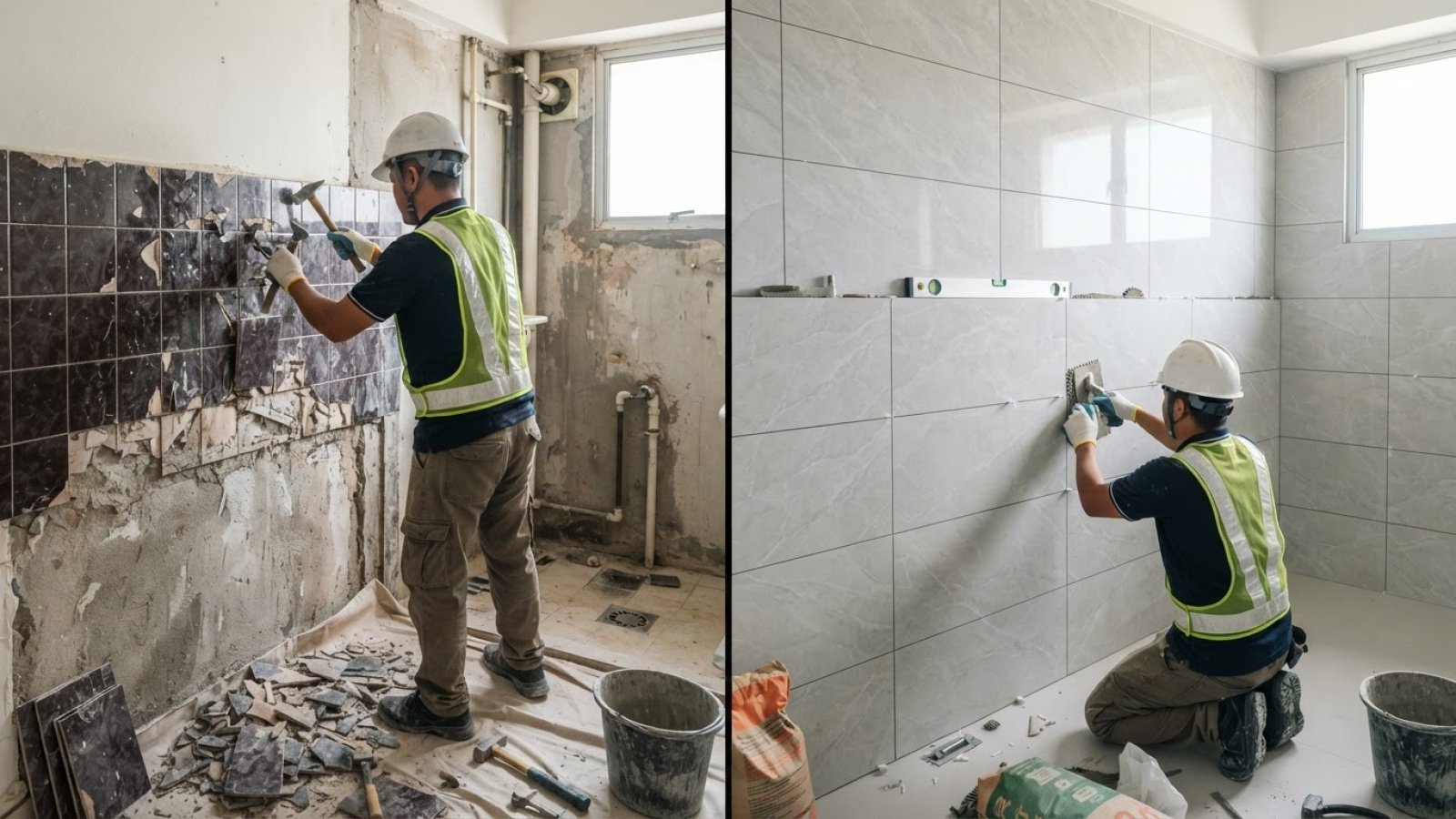
Hack or Overlay Tiles Condo Singapore: What's Best for You?
When you're renovating your condo in Singapore, one of the most common decisions you'll face is what to do with your existing floor tiles. You've got two main options: completely remove the old tiles (hacking) or lay new tiles directly on top of the old ones (overlaying). Each approach has its own set of advantages and disadvantages. We'll break down what each involves so you can make an informed choice for your home.
The Case for Hacking Existing Tiles
Hacking involves the complete removal of your current floor tiles, right down to the screed or concrete subfloor. This is the more involved, and usually more expensive, method. However, it offers a clean slate.
The biggest benefit of hacking is that it allows us to inspect the subfloor for any damage, moisture issues, or unevenness that might be hidden beneath the existing tiles. If there are problems, we can fix them properly before laying new tiles. This is crucial for ensuring the longevity and stability of your new flooring. Plus, hacking ensures your new tiles are laid on a truly flat and sound surface, reducing the risk of future cracking or loosening.
It also means your finished floor height won't increase significantly. This is important if you have existing structures like built-in cabinets, door frames, or skirting that you want to maintain without having to adjust them.
On the downside, hacking is a messy and noisy process. It generates a lot of dust and debris, which requires careful containment and disposal. The labour costs are higher because it's more intensive work. You'll also need to factor in the cost of screeding if the subfloor needs levelling after the old tiles are removed.
The Appeal of Overlaying Tiles
Overlaying, also known as tiling over existing tiles, is a quicker and generally less disruptive option. It involves cleaning the existing tile surface thoroughly and then adhering new tiles directly on top.
The main advantage here is speed and cost. Because you're skipping the demolition stage, labour costs are typically lower, and the renovation timeline is shorter. It's also a much cleaner process, with far less dust and noise compared to hacking. This can be a significant consideration, especially if you're living in your condo while renovations are ongoing or if you have close neighbours.
However, overlaying isn't suitable for all situations. The existing tiles must be in good condition, firmly adhered to the subfloor, and free from cracks or major damage. If the old tiles are loose or the subfloor is uneven, overlaying will likely lead to problems down the line, such as tiles cracking or lifting.
A key consideration with overlaying is the increase in floor height. The new layer of tiles, plus any adhesive, will add thickness to your floor. This can create issues with door clearances, existing skirting boards, and the transition to other flooring materials in adjacent rooms. You might need to trim doors or even remove and re-install skirting.
Also, if there's any moisture or structural issue beneath the original tiles, overlaying will just cover it up, potentially allowing it to worsen over time.
When to Choose Which Method for Your Condo
The decision between hacking and overlaying really depends on several factors specific to your condo and your renovation goals.
- Condition of Existing Tiles: If your current tiles are cracked, loose, or damaged, hacking is almost always the better choice. Overlaying on a compromised base is a recipe for future problems.
- Budget: Overlaying is generally more budget-friendly due to lower labour costs and a shorter renovation period. Hacking, with its extra labour, disposal, and potential for screeding, will cost more.
- Timeline: If you have a tight deadline, overlaying is the faster option. Hacking and subsequent preparation can take significantly longer.
- Desired Finished Floor Height: If maintaining the current floor height is critical (e.g., for fitted furniture or doorways), hacking is usually preferred. Overlaying will inevitably raise the floor level.
- Subfloor Condition: We always recommend a thorough inspection of the subfloor. If there are known or suspected issues like dampness or unevenness, hacking allows for proper rectification.
- Aesthetics: Sometimes, you might want to change the entire subfloor, perhaps to lay a different type of flooring altogether. In such cases, hacking is necessary.
What About Different Types of Flooring?
While this discussion focuses on tiles, the principles of hacking versus overlaying can apply to other flooring materials too. For instance, if you have old vinyl flooring, you might be able to overlay new vinyl or even certain types of tiles. However, for materials like hardwood or laminate, removal is usually necessary before installing a new floor.
If you're considering a completely different look, like changing from tiles to timber or vinyl planks, hacking the old tiles is essential to ensure a stable and level base for the new material. Overlaying is typically only an option when replacing like with like, or when the new material is specifically designed to be laid over existing surfaces.
Understanding MCST Rules
Condominiums are managed by a Management Corporation Strata Title (MCST). While they don't usually have specific rules about whether you can hack or overlay tiles within your own unit, they do have regulations regarding renovation works. These typically cover:
- Renovation Hours: MCSTs usually dictate specific working hours for noisy or disruptive activities to minimise inconvenience to other residents. Ensure your contractor adheres strictly to these timings.
- Noise and Vibrations: While hacking is inherently noisy and causes vibrations, contractors should take reasonable steps to mitigate disturbance to neighbours.
- Debris Disposal: MCSTs will have procedures for renovation waste disposal. Improper disposal can lead to fines.
- Protection of Common Property: Any work done that might affect common areas, such as lift lobbies or staircases, needs to be managed carefully and may require prior approval.
It's always best to check with your MCST for their specific renovation guidelines before starting any work. They may require you to submit a renovation proposal.
Frequently Asked Questions
Is overlaying tiles cheaper than hacking?
Generally, yes. Overlaying avoids the labour-intensive demolition and debris removal costs associated with hacking, making it the more economical choice for many projects.
Can I overlay tiles if my current tiles are uneven?
It's not recommended. Uneven existing tiles will result in an uneven new floor, which can lead to aesthetic issues and potential damage to the new tiles over time. Hacking and levelling the subfloor is the correct approach.
How much does hacking and overlaying cost in Singapore?
The cost varies significantly depending on the size of the area, the type of tiles, the complexity of the job, and the contractor. Hacking typically involves removal, disposal, and potential screeding costs, while overlaying is mainly the cost of the new tiles, adhesive, and labour for installation.
Will overlaying tiles increase the risk of leaks?
Not directly, but if there are existing undetected leaks or moisture issues beneath the original tiles, overlaying will simply conceal them. Hacking allows for proper inspection and repair of any water-related problems before new tiling commences.


